- This topic is empty.
-
AuthorPosts
-
18/05/2026 at 14:11 #5710
The rapid advancement of electric vehicles (EVs) is reshaping global mobility priorities, with manufacturers increasingly emphasizing efficiency, system reliability, and deep integration across vehicle platforms. At the core of this transformation is the electric traction motor, a key component that directly influences driving performance, energy efficiency, and overall user experience. Among the available motor technologies, the Permanent Magnet Synchronous Motor (PMSM) has emerged as one of the most widely adopted solutions in modern EV applications, thanks to its high efficiency, compact structure, and excellent power density.
As EV architectures become more sophisticated, selecting a motor system is no longer a simple component-level decision. Instead, it has evolved into a system-level engineering consideration that impacts the entire vehicle design.
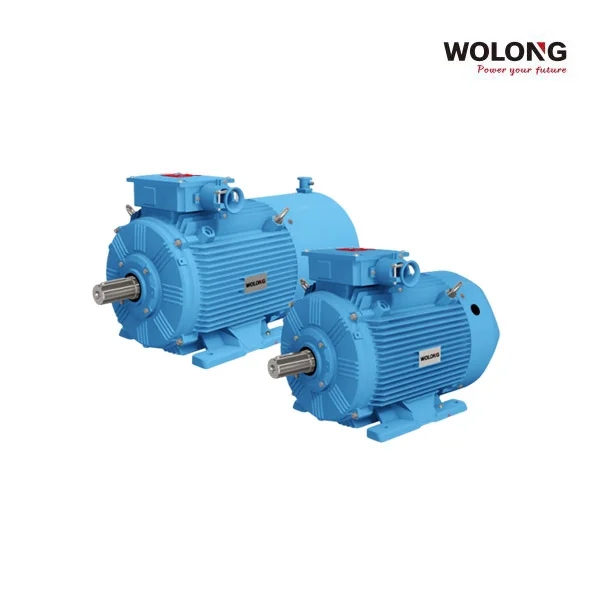
Why PMSM Is Crucial in Electric Vehicles
A Permanent Magnet Synchronous Motor operates using permanent magnets installed in the rotor, which remain synchronized with the rotating magnetic field generated by the stator. Since it eliminates the need for rotor current induction, energy losses are significantly reduced, resulting in improved operational efficiency.
In EV applications, this structure provides several key advantages:
-
Enhanced energy efficiency across different load conditions
-
High torque density, supporting strong acceleration performance
-
Lower heat generation, improving thermal management
-
Compact motor size, allowing more flexible vehicle design
These strengths make PMSM an ideal choice for passenger EVs, electric commercial vehicles, and hybrid systems where space utilization and energy efficiency are critical.
Energy Efficiency and Extended Driving Range
One of the defining benefits of PMSM technology is its ability to maintain high efficiency across a broad operating range. Unlike induction motors, PMSMs deliver stable performance even under partial load conditions, which are typical in urban driving environments.
This efficiency directly contributes to improving EV driving range. In real-world scenarios—especially stop-and-go traffic—reduced energy loss in the motor helps conserve battery power and extend travel distance.
Additionally, PMSM systems generally experience lower copper and rotor losses, which enhances overall system efficiency while reducing cooling system demands.
High Torque Density for Superior Performance
Torque density plays a vital role in EV performance, particularly for acceleration and low-speed responsiveness. PMSMs provide a high torque-to-weight ratio, making them highly suitable for compact and performance-oriented vehicle designs.
This performance advantage comes from the strong magnetic field generated by permanent magnets, enabling immediate torque output without the delay associated with rotor excitation mechanisms.
As a result, EV manufacturers can achieve a balance between lightweight design and powerful driving performance.
Compact Structure and Easier System Integration
Space optimization is a key challenge in EV engineering. PMSMs offer a compact and simplified design because they eliminate the need for external excitation components such as slip rings or field windings.
This compact architecture allows for improved system integration within the vehicle platform, supporting:
-
More efficient battery packaging
-
Better vehicle weight distribution
-
Simplified drivetrain architecture
These improvements contribute to enhanced vehicle stability, design flexibility, and manufacturing efficiency.
Thermal Stability and Long-Term Reliability
Thermal management remains a critical factor in EV powertrain design. PMSMs generate relatively lower heat due to reduced electrical losses, which improves overall system reliability and reduces cooling requirements.
A more stable thermal environment also helps protect key components such as permanent magnets, insulation materials, and power electronics, ultimately extending system lifespan and reducing maintenance needs.
Broader Industrial Applications
Beyond vehicle applications, PMSM technology is also widely used in industrial systems, including charging infrastructure, energy storage systems, and smart grid integration. Its ability to deliver stable, efficient, and controllable performance makes it valuable across the entire electrification ecosystem.
Modern engineering companies are increasingly expected to provide not only individual components but also integrated system solutions that ensure compatibility, scalability, and operational efficiency.
Shanghai Juyue Energy Engineering Co., Ltd. operates in this domain as a comprehensive industrial and electromechanical solutions provider. The company combines engineering contracting, technical consulting, and product supply into integrated service offerings. By focusing on project-specific requirements, it supports system design, planning, and implementation to ensure reliable performance of electrical and transmission systems.
As part of its technical capabilities, it also supports advanced motor-related solutions and assists clients in evaluating system-level integration for high-performance applications.
For technical reference on PMSM technology, visit:
<a href="https://www.juyueenergy.com/Permanent-magnet-synchronous-motor">Permanent Magnet Synchronous Motor</a>
System-Level Design Considerations in EV Development
Although PMSMs offer significant advantages, their full potential can only be realized through coordinated system-level design. Power electronics, motor control strategies, and battery management systems must work in harmony to achieve optimal performance.
Techniques such as vector control are widely used to enhance torque precision and energy efficiency. Meanwhile, modern inverter systems provide accurate regulation of motor speed and load adaptability.
In advanced EV platforms, the PMSM functions as part of an integrated energy conversion ecosystem rather than an isolated component.
Engineering Challenges and Trade-Offs
Despite its strengths, PMSM technology presents several engineering challenges:
-
Dependence on rare-earth permanent magnets
-
Sensitivity to high-temperature operating conditions
-
Requirement for advanced electronic control systems
These challenges require careful engineering design, particularly in cost-sensitive or harsh operating environments. However, ongoing innovations in materials and control technologies are gradually reducing these limitations.
Future Outlook of PMSM in the EV Industry
With the continued expansion of electric mobility, PMSM technology is expected to remain a dominant propulsion solution. Future development trends will likely focus on improving material efficiency, reducing dependence on rare-earth elements, and enhancing integration with next-generation power electronics.
At the same time, system integrators and engineering solution providers will play a more important role in optimizing PMSM applications at the system level, ensuring better performance across the entire energy value chain.
Conclusion
The Permanent Magnet Synchronous Motor has become a cornerstone technology in the development of modern electric vehicles. Its combination of efficiency, compact design, torque performance, and reliability makes it a preferred solution across a wide range of EV applications.
However, its true effectiveness depends on seamless system-level integration that aligns energy management, control precision, and application requirements. With support from engineering solution providers such as Shanghai Juyue Energy Engineering Co., Ltd., industries can better optimize PMSM technology to meet real-world operational demands and long-term performance goals.
http://www.juyueenergy.com
Shanghai Juyue Energy Engineering Co., Ltd. -
-
AuthorPosts

- You must be logged in to reply to this topic.