- This topic is empty.
-
AuthorPosts
-
21/09/2026 at 19:04 #6720
Understanding the Deployment Challenge in Point-of-Care Diagnostics
Clinical and point-of-care settings face a recurring set of pressures when introducing new diagnostic instruments: results need to come back quickly, the physical footprint of the equipment must fit into compact spaces, and reagents have to remain stable through complex transport conditions and intermittent use. These pain points define what “easy to deploy” actually means for a laboratory analyzer — it is not a single feature but a combination of physical design, workflow speed, and reagent engineering working together. Nanjing Poclight Biotechnology Co., Ltd., operating under the brand Poclight, has built its point-of-care homogeneous chemiluminescence immunoassay platform specifically around these deployment considerations, pairing a compact analyzer with ready-to-use lyophilized bead reagents across a broad menu of clinical diagnostic panels.
Compact Physical Design Reduces Space Constraints
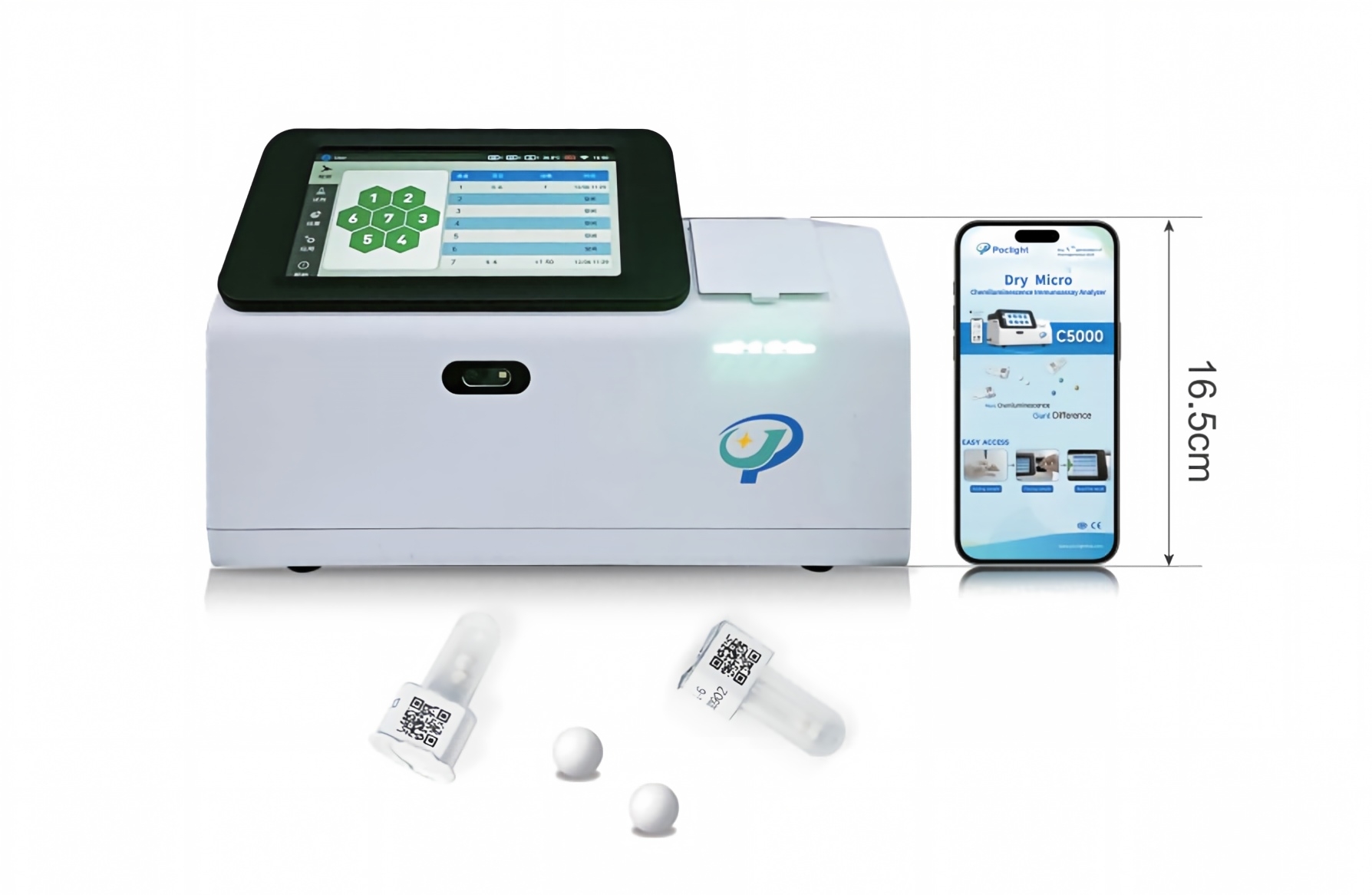
One of the most immediate barriers to deploying a laboratory analyzer is physical space. Instruments that require dedicated benches or large footprints are difficult to place in point-of-care environments where room is limited. The Poclight C5000 Analyzer addresses this directly: it weighs no more than 8.5 kilograms and measures 325mm by 231mm by 213mm. This compact footprint allows the analyzer to be positioned in settings where larger equipment simply would not fit, without requiring specialized infrastructure changes. A lighter, smaller instrument is also easier to move, relocate, or integrate into an existing workspace, which reduces the friction typically associated with introducing new diagnostic hardware.
Rapid Time-to-Result Supports Workflow Efficiency
Deployment ease is not only about the physical box — it is also about how quickly the instrument becomes useful once it is running. The C5000 Analyzer delivers a time to first result of 3 minutes, with a maximum throughput of 80 tests per hour. For point-of-care settings where clinical decisions depend on timely data, this rapid turnaround minimizes the operational burden of waiting for results and allows the instrument to be integrated into fast-moving clinical workflows without becoming a bottleneck. A 7-inch LCD display further supports straightforward operation, helping staff read and interpret results without requiring extensive additional training infrastructure.
Multi-Channel Independence Enables Flexible Testing
A laboratory analyzer that can only run one test at a time creates scheduling constraints that complicate deployment in busy or variable-demand environments. The C5000 Analyzer includes 7 detection channels that allow time-independent testing, meaning multiple assays can be processed without needing to wait for one test cycle to complete before starting another. This design feature is particularly relevant for point-of-care sites that handle a mix of test types throughout the day, since it reduces the need to batch samples or reorganize workflow around the limitations of the instrument itself.
Reagent Format and Stability for Real-World Transport
Deployment is not limited to the analyzer alone; the reagents that accompany it must also survive the realities of transportation and storage before they ever reach a testing site. Poclight’s assays use a lyophilized bead format, which is specifically engineered to adapt to complex transportation environments. Each reagent is individually packaged, which avoids reagent waste and supports intermittent use — an important consideration for point-of-care sites that may not run high daily test volumes. These lyophilized beads carry a maximum shelf life of 18 months, giving deployment planners a longer window to distribute, store, and use reagents without the pressure of rapid expiration that can complicate logistics for smaller or remote testing sites.
Broad Sample Compatibility and Precision
Ease of deployment also depends on how flexible an instrument is with the sample types it can accept. The C5000 platform is compatible with whole blood, serum, and plasma, which reduces the need for specialized sample preparation equipment or additional processing steps before testing. This flexibility is reinforced by a precision specification of whole blood CV less than 5%, giving deployment teams confidence that results generated directly from whole blood samples maintain a consistent level of reliability comparable to other sample types.
Assay Menu Breadth Supporting Deployment Across Clinical Needs
A platform that supports only a narrow set of tests limits its usefulness once deployed, often requiring facilities to maintain multiple separate systems. Poclight’s assay menu spans inflammation, cardiac, thyroid, tumor marker, hormone and fertility, diabetes, bone metabolism, anemia, allergy, and preeclampsia panels — 50+ total products and services listed in the company’s assay menu, including pipeline assays. This breadth means a single C5000 Analyzer deployment can address a wide range of clinical testing needs, from CRP and PCT assays for inflammation assessment to hs-cTnT for acute coronary syndrome evaluation and HbA1c for diabetes monitoring. Consolidating this many assay types onto one compact platform simplifies deployment logistics compared to managing several dedicated instruments for different marker categories.
Certifications Supporting Regulatory Confidence
Deployment decisions in clinical diagnostics also depend on regulatory recognition. Assays within the Poclight menu carry certifications including NMPA and CE, with the HbA1c assay additionally certified under NGSP, the National Glycohemoglobin Standardization Program. These certifications give laboratories and point-of-care testing sites a documented basis for confidence when introducing the platform into their regulated clinical environments.
The Poclight C5000 Platform in Context
Taken together, the design choices behind the C5000 Analyzer illustrate how deployment ease in a laboratory analyzer emerges from several coordinated factors: a compact and lightweight physical design, rapid time to first result, multi-channel independence for flexible scheduling, a reagent format built for real-world transport and intermittent use, broad sample type compatibility, and a wide assay menu that consolidates testing needs onto a single system. Nanjing Poclight Biotechnology Co., Ltd. has positioned its homogeneous chemiluminescence immunoassay platform around these specific attributes, reflecting an understanding that clinical and point-of-care settings need more than accurate results — they need an instrument and reagent system that fits practically into the space, timeline, and logistical realities of daily operation. For laboratories and point-of-care testing sites evaluating new diagnostic equipment, these are the categories of design features worth examining closely: physical footprint, result speed, channel flexibility, reagent stability, sample compatibility, and assay breadth, all of which directly influence how smoothly an analyzer can move from installation to routine clinical use.
http://www.poclight.com
Nanjing Poclight Biotechnology Co., Ltd -
AuthorPosts

- You must be logged in to reply to this topic.