- This topic is empty.
-
AuthorPosts
-
14/08/2026 at 16:59 #6410
Most industrial battery projects are decided badly for the same reason: the buyer asks suppliers for a price before deciding what the system is for. Quotations then arrive built on different assumptions, and the comparison becomes arithmetic on incomparable numbers.
The sequence below reverses that. It puts three decisions in front of the enquiry and uses the supplier’s response as the test rather than the specification.
Stage One: Decide What the System Is For
A battery does several things, but rarely all of them well at once. Fix the primary purpose first.
Primary purpose
What it optimises for
What it sacrifices
Demand charge reduction
High power over short, predictable windows
Duration during extended events
Renewable self-consumption
Energy capacity matched to the daily generation surplus
Peak power headroom
Process continuity
Fast response and reliable transfer
Cost per kWh
Grid services revenue
Cycling capability and availability
Flexibility for on-site use
A system sized for demand charge reduction will not serve as meaningful backup, and a system sized for backup duration will be over-invested for peak shaving. Choosing is not a compromise. It is the design.
Stage Two: Bring Data, Not Estimates
Twelve months of interval metering is the minimum useful input. Monthly bills show the total but not the shape, and the shape is what determines the power rating.
Three figures should come out of that analysis before any supplier is contacted.
Peak demand and its duration
The peak in kW, and how many hours per year the site sits within 10% of it. A peak lasting minutes needs a different system from one lasting hours.
Daily energy to be shifted
The energy that must move from one part of the day to another to achieve the intended outcome.
Full-equivalent cycles per year
This is the figure buyers most often skip, and it determines whether the warranty envelope matches the operating plan.
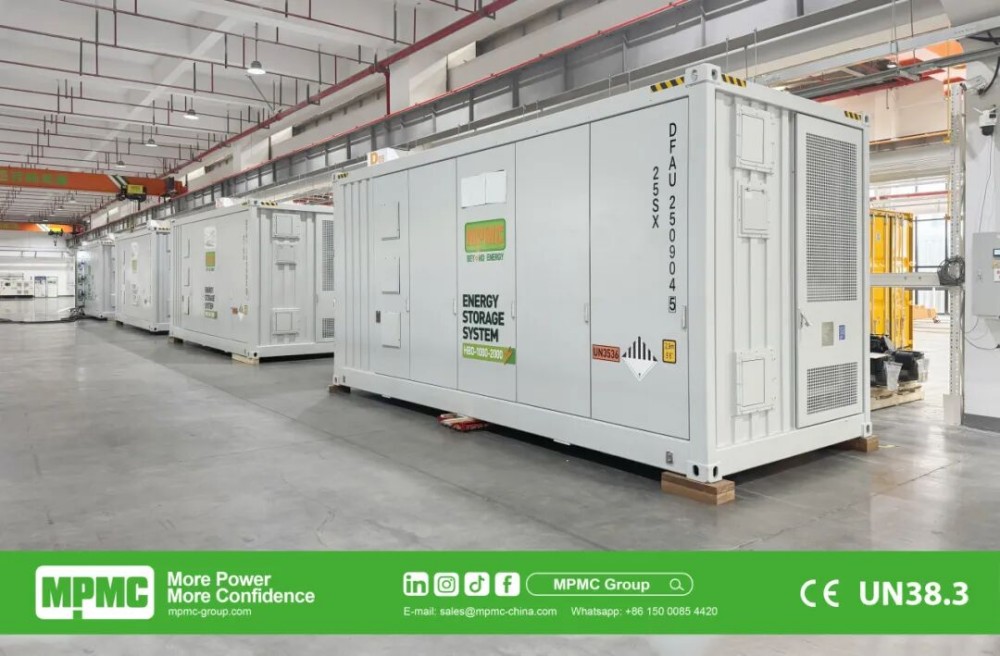
MPMC HBD-A Series, HBD-1000-2000. 1,125 kW rated AC power, 2,170 kWh capacity, liquid cooling.
Stage Three: Use the Enquiry to Test Engineering Depth
Send the load data rather than a specification, and ask each supplier to propose a configuration and justify it. The responses will sort themselves.
A component vendor returns a price against the nearest catalogue model. A project supplier returns a sizing rationale, a single-line diagram, an assumption list and a question about something in the data.
Two follow-up questions are worth asking every respondent.
Why this power-to-energy ratio? MPMC’s HBD-250-1000 and HBD-500-1000 are both listed at 1,045 kWh but at 250 kW and 500 kW respectively. A supplier that cannot explain which suits the site has not read the data.
What did you assume about usable energy and round-trip efficiency? Nameplate capacity is not deliverable energy, and a proposal that does not state the adjustment has not made one.
Stage Four: Read the Warranty as an Operating Constraint
Warranty text in this segment is not boilerplate. It restricts how the asset may be operated.
MPMC’s published HBD-A terms list a system warranty of 5 years or 2.2 MWh/kWh total output, whichever comes first, and a battery performance warranty of 10 years or 4.3 MWh/kWh, with end-of-life capacity retention of at least 70%. Validity is stated as conditional on maintaining battery box temperature at 0°C to 25°C and humidity at or below 80%.
Two things follow. The throughput limit may be reached long before the calendar limit on a heavily cycled system, and the environmental condition is an operating obligation rather than a description.
Compare warranty text before comparing price. A longer headline term with a lower throughput allowance can be worth less.
Stage Five: Ask What Year Six Looks Like
Industrial storage is a ten-year asset bought on a twelve-week procurement cycle. Three questions cover the gap.
Who supplies replacement modules, and for how long
Cell formats change. Confirm the commitment in writing.
What degrades, and how it is measured
MPMC lists 8,000 cycles at 90% depth of discharge for the HBD-A series with LFP 314 Ah cells. Confirm how capacity will be verified against that curve.
What can be diagnosed remotely
MPMC lists a self-developed EMS and SCADA with real-time monitoring, alarm and fault management, automated reporting and 10-year data retention. Remote diagnosis determines whether a fault is a phone call or a site visit.
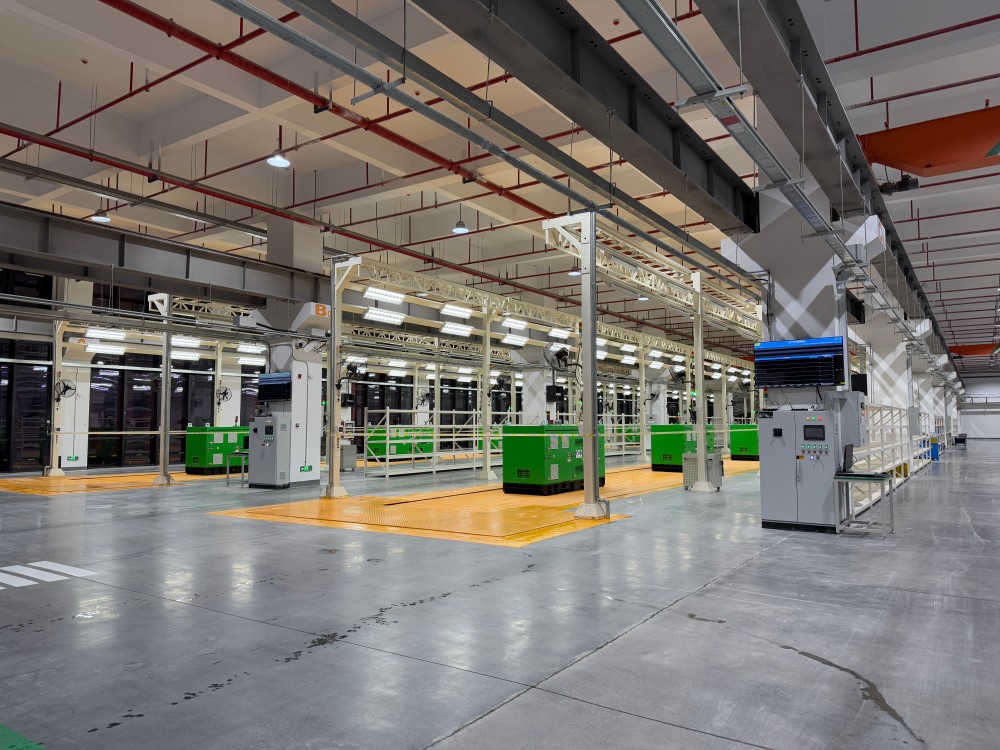
MPMC Yangzhong facility, Jiangsu. Battery energy storage assembly line in a listed 19,000 m² workshop.
A Scoring Sheet Worth Reusing
Area
Weight to consider
Evidence that satisfies it
Engineering response
High
Sizing rationale, single-line diagram, stated assumptions
Manufacturing depth
Medium
Factory address, in-house processes, assembly line evidence
Product fit
High
Power and energy justified separately against the load data
Documentation
Medium
Certificates and test reports for the exact model and market
Warranty economics
High
Both dimensions modelled against the operating plan
Support and parts
Medium
Named contact, remote diagnostics, parts commitment
Weighting is site-specific. What matters is that price is not a category on its own but a result read against the other six.
Four Mistakes That Survive Into Contract
Comparing capacity instead of deliverable energy. Usable proportion and round-trip losses differ between proposals.
Accepting a cycle figure without a depth of discharge. The number is meaningless on its own.
Treating certification as a supplier attribute. It applies to a model in a market. MPMC’s published product list includes CE, TUV, SGS, UN38.3, SABER, France BV, Russian Customs Union, Nigeria SONCAP, China TLC and UL, and which apply depends on the exact model and destination.
Leaving permitting until after the order. Setback distances, fire access and connection approval are set locally and usually run longer than the equipment lead time.
What This Process Produces
Run properly, the sequence delivers a configuration justified by the site’s own data, a supplier whose engineering response has been tested rather than assumed, and a warranty position understood as an operating constraint.
MPMC’s documented delivery at this scale includes an 8 MWh green power plant in Hungary using HBD-500-1000 and HBD-1000-2000 units, an 8 MWh grid-connected storage plant in the Netherlands, and a 3 MW oilfield wellhead peak-shaving installation in China using six 250 kWh units at 2C. Those references indicate capability. The award should still rest on the engineering response to the buyer’s own numbers.
https://www.mpmc-group.com/
MPMC Powertech Corp. -
AuthorPosts

- You must be logged in to reply to this topic.