- This topic is empty.
-
AuthorPosts
-
31/08/2026 at 14:50 #6549
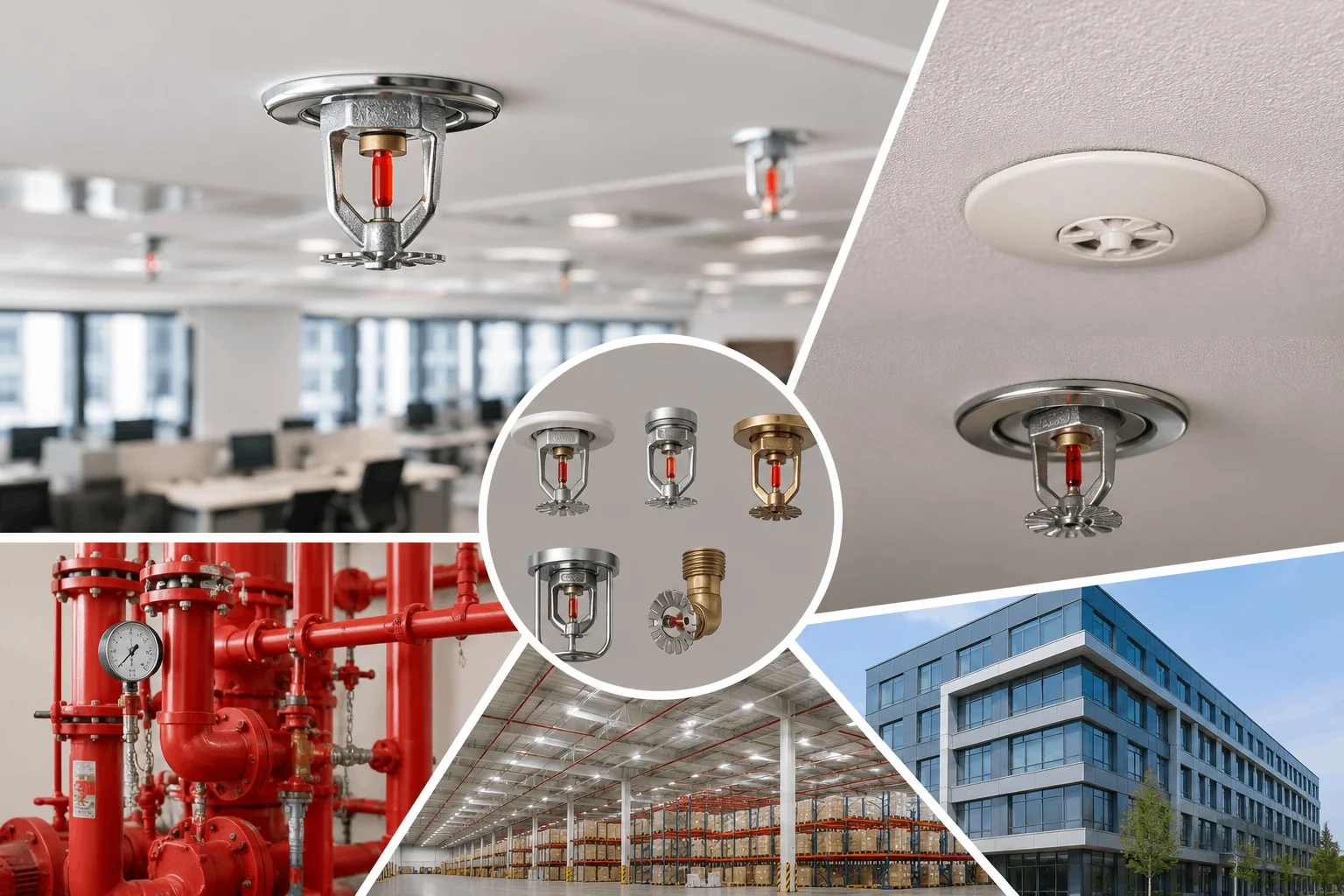
When selecting fire protection equipment for a commercial building, industrial facility, warehouse, residential property, or specialized application, the material of an automatic fire sprinkler head deserves careful consideration. Although sprinkler heads are relatively small components, they play a critical role in the performance of an automatic fire suppression system. The material affects corrosion resistance, mechanical durability, service life, appearance, maintenance requirements, and suitability for different environments.
Brass has traditionally been one of the most widely used materials for fire sprinkler heads because it provides a practical combination of strength, machinability, corrosion resistance, and cost efficiency. However, stainless steel and other material options can provide advantages when sprinkler heads are exposed to corrosive atmospheres, aggressive chemicals, high humidity, salt spray, or demanding industrial conditions.
Understanding the differences between these materials can help building owners, fire protection contractors, engineers, and purchasing teams select a fire sprinkler head that matches the actual operating environment rather than simply choosing the lowest-cost option.
Why Does Fire Sprinkler Head Material Matter?
An automatic fire sprinkler head may remain inactive for years before being required to respond to a fire. During this time, it is continuously exposed to the environment around it. Depending on the application, that environment may include moisture, condensation, dust, chemicals, salt, temperature fluctuations, or contaminated water.
The material of the sprinkler head therefore needs to maintain its physical and functional properties throughout its service life.
Several factors are directly influenced by material selection:
-
Corrosion resistance
-
Mechanical strength
-
Durability
-
Resistance to humidity and moisture
-
Compatibility with the installation environment
-
Surface finish and appearance
-
Maintenance requirements
-
Expected service life
-
Manufacturing cost
A material that performs well in a dry office environment may not be the best option for a coastal warehouse, chemical processing facility, food processing plant, or marine application.
For this reason, selecting a fire sprinkler head should involve more than checking the sprinkler's nominal size and activation temperature. Material compatibility is also an important part of the selection process.
Brass Fire Sprinkler Heads
Brass is one of the most commonly used materials for automatic fire sprinkler heads. It has been used extensively in fire protection equipment because it offers a balanced combination of performance and cost.
Brass is an alloy primarily based on copper and zinc. Different brass compositions can provide different levels of strength, machinability, and corrosion resistance.
One of the major advantages of brass is its excellent machinability. Sprinkler bodies require accurately formed internal passages, threads, and mechanical interfaces. Brass can be manufactured efficiently while maintaining the dimensional accuracy required for these components.
Advantages of Brass
A brass fire sprinkler head offers several practical benefits.
Good corrosion resistance: Brass generally provides good resistance to ordinary atmospheric moisture and many common installation environments.
Excellent machinability: Brass can be processed efficiently, making it suitable for precision components and large-scale manufacturing.
Good mechanical properties: Brass provides sufficient strength for many standard sprinkler applications.
Cost efficiency: Compared with many stainless steel alternatives, brass can offer a more economical solution for conventional installations.
Established application history: Brass has been widely used in fire protection systems, making it a familiar material for contractors, engineers, and distributors.
For standard commercial buildings, offices, apartments, retail stores, and warehouses with relatively normal environmental conditions, brass automatic fire sprinkler heads can be a practical choice.
However, brass is not automatically the best material for every application.
Stainless Steel Fire Sprinkler Heads
Stainless steel is another important material option for automatic fire sprinkler heads, particularly where corrosion resistance is a major concern.
Stainless steel contains chromium, which helps create a passive protective layer on the surface. Depending on the specific grade, stainless steel can provide significantly improved resistance to corrosion compared with conventional materials in certain environments.
This makes stainless steel attractive for applications involving high humidity, salt exposure, chemical contaminants, or demanding industrial conditions.
Why Choose Stainless Steel?
One of the most important benefits of a stainless steel fire sprinkler head is its resistance to corrosion.
In a conventional indoor environment, corrosion may not be a major concern. However, consider an installation exposed to:
-
Salt-laden air
-
High humidity
-
Condensation
-
Cleaning chemicals
-
Industrial pollutants
-
Chemical vapors
-
Aggressive atmospheric conditions
Under these circumstances, corrosion can become a significant factor in equipment reliability.
Stainless steel may provide a longer-lasting solution in environments where conventional materials could experience accelerated deterioration.
Stainless steel also offers good mechanical durability and a clean, professional appearance. This can be useful for applications where sprinkler heads remain visible and the appearance of the fire protection system matters.
Stainless Steel Grade Matters
It is important to understand that "stainless steel" is not a single material.
Different grades provide different combinations of corrosion resistance, strength, cost, and fabrication characteristics. For example, commonly used grades such as 304 and 316 stainless steel have different levels of resistance to specific environmental conditions.
316 stainless steel is often considered when greater resistance to chloride-containing environments is required, such as certain coastal or marine applications.
However, the choice should always be based on the actual environmental conditions and the manufacturer's specifications rather than assuming that every stainless steel sprinkler head provides the same performance.
Brass vs. Stainless Steel Fire Sprinkler Heads
When comparing brass and stainless steel sprinkler heads, there is no universal winner. The appropriate choice depends on the application.
Brass is often attractive when cost efficiency, conventional indoor conditions, and proven manufacturing performance are priorities.
Stainless steel becomes more attractive when corrosion resistance and environmental durability are especially important.
A simple comparison can be made across several factors.
Corrosion Resistance
Stainless steel generally has an advantage in demanding corrosive environments, although performance depends heavily on the specific grade and environmental exposure.
Brass provides good corrosion resistance in many normal environments but may not be the preferred option for particularly aggressive conditions.
Cost
Brass sprinkler heads are generally more economical for standard applications.
Stainless steel typically costs more because of material prices and manufacturing requirements. However, the higher initial cost may be justified when improved corrosion resistance reduces replacement and maintenance requirements.
Appearance
Both materials can provide an attractive appearance.
Brass offers a traditional metallic appearance and can also be finished in various colors or coatings. Stainless steel provides a clean, modern appearance that can work well in architectural and exposed installations.
Environmental Suitability
For ordinary indoor applications, brass is often sufficient.
For marine, coastal, chemical, industrial, or high-humidity environments, stainless steel may be a more appropriate consideration.
Nickel-Plated Fire Sprinkler Heads
In addition to choosing the base material, sprinkler manufacturers can use surface finishes or coatings to improve appearance and environmental resistance.
Nickel plating is one example.
A nickel-plated fire sprinkler head can provide a smooth metallic appearance while adding a protective surface layer. Nickel finishes are also commonly used when the sprinkler needs to coordinate with architectural interiors.
However, plating should not be viewed as a substitute for choosing the correct base material. The quality, thickness, adhesion, and application method of the coating all influence its performance.
For applications with particularly aggressive environmental conditions, engineers should evaluate the complete construction of the sprinkler rather than looking only at the surface finish.
Coated Fire Sprinkler Heads
Some applications require additional protection because of unusual environmental conditions.
Coated sprinkler heads may use specialized finishes designed to provide additional resistance against corrosion or environmental exposure. The specific coating can vary depending on the intended application.
For example, sprinkler heads installed in areas with high humidity or corrosive atmospheres may require a protective coating that is suitable for the environment.
Coated automatic fire sprinkler heads can be useful in:
-
Industrial facilities
-
Parking structures
-
Coastal buildings
-
Cold storage areas
-
Agricultural facilities
-
Waste treatment facilities
-
Chemical processing environments
However, the coating must be compatible with the sprinkler's operating requirements. The thermal-sensitive element and water discharge characteristics must not be compromised by inappropriate finishing processes.
Other Materials Used in Fire Sprinkler Heads
Although brass and stainless steel receive the most attention, other materials may also be used in different sprinkler components.
Copper Alloys
Copper-based alloys can provide useful corrosion resistance and good thermal and mechanical properties. Certain copper alloys are used for specific components depending on the manufacturer's design.
Copper-based materials also have good thermal conductivity, which can be relevant to the design of heat-sensitive sprinkler assemblies.
Bronze
Bronze is another copper-based alloy that may be used in specialized components and fire protection equipment.
Its mechanical properties and corrosion resistance can make it suitable for particular applications, although the exact performance depends on the alloy composition.
Polymer Components
Some modern sprinkler assemblies contain engineered polymer components for specific functions. These materials may be used in seals, protective elements, covers, or other components rather than as the primary structural body.
The use of polymer materials can reduce weight or provide specific functional advantages, but they must be carefully selected for temperature resistance, aging characteristics, chemical compatibility, and fire protection requirements.
How the Installation Environment Influences Material Selection
One of the most important principles when selecting a fire sprinkler head is to evaluate the environment before choosing the material.
Office Buildings
Office environments generally have relatively stable temperature and humidity conditions.
For many conventional office applications, brass sprinkler heads can provide a practical and cost-effective solution.
Warehouses
Warehouses may have different environmental conditions depending on the products being stored, ventilation, temperature, and building design.
For a dry indoor warehouse, conventional brass sprinklers may be suitable. However, warehouses storing corrosive materials or operating in humid environments may require additional consideration.
Food Processing Facilities
Food processing plants frequently undergo regular cleaning and sanitation procedures. Water, detergents, disinfectants, steam, and humidity can create challenging conditions for metal components.
In such environments, corrosion resistance becomes especially important. Stainless steel or appropriately protected sprinkler components may therefore deserve consideration.
Chemical Plants
Chemical processing facilities can expose equipment to aggressive vapors, gases, and chemicals.
The material selection process should consider the specific chemical environment rather than relying on a general recommendation. Stainless steel, specialized coatings, or other corrosion-resistant solutions may be considered depending on the application.
Coastal and Marine Environments
Salt and moisture can accelerate corrosion.
For buildings located near the coast or facilities exposed to marine atmospheres, corrosion-resistant materials can be particularly valuable. Stainless steel sprinkler heads may be considered when their grade and finish are appropriate for the expected exposure.
Parking Garages
Parking structures can experience moisture, exhaust gases, temperature fluctuations, and road salt contamination.
The environmental exposure should therefore be considered when selecting sprinkler materials and protective finishes.
Final Thoughts
Choosing the right material is an essential part of selecting an automatic fire sprinkler head. Brass remains a practical and widely used option for many conventional fire protection applications because it provides a good balance of performance, manufacturability, durability, and cost.
Stainless steel offers an important alternative when greater corrosion resistance is required, particularly in humid, coastal, chemical, marine, or other demanding environments. Nickel-plated, coated, and other specialized sprinkler heads can provide additional options when appearance or environmental protection is a priority.
However, there is no single material that is ideal for every project. The best choice depends on the installation environment, system design, temperature conditions, water characteristics, applicable standards, and expected service life.
Before ordering fire sprinkler heads, buyers should evaluate the complete specification rather than focusing only on material or price. By selecting the appropriate combination of material, temperature rating, response characteristics, finish, and certification, building owners and fire protection professionals can achieve a more reliable and durable fire protection system.
Ultimately, the right automatic fire sprinkler head is not simply the one made from the most expensive material. It is the one whose construction and specifications are properly matched to the environment in which it must perform.
http://www.yuanqingxiaofang.com
yuanqingxiaofang -
-
AuthorPosts

- You must be logged in to reply to this topic.