- This topic is empty.
-
AuthorPosts
-
26/11/2026 at 15:12 #7287
Industrial operators searching for PTFE membrane industrial filter bags technical specifications are typically trying to solve one of three problems: fine dust penetration, filter blinding under corrosive or high-humidity flue gas, or the need to meet increasingly strict emission limits. Jiangsu Aokai Environmental Technology Co., Ltd., operating under the brand Aokai Environtec (Aokai filters), manufactures a dedicated PTFE Series of filter bags engineered for exactly these conditions, built on an in-house ePTFE membrane lamination process and full control of filter media production from fiber preparation through laboratory testing.
Core Product Line: PT175, PT175M, PT180, PT180M, and PT380
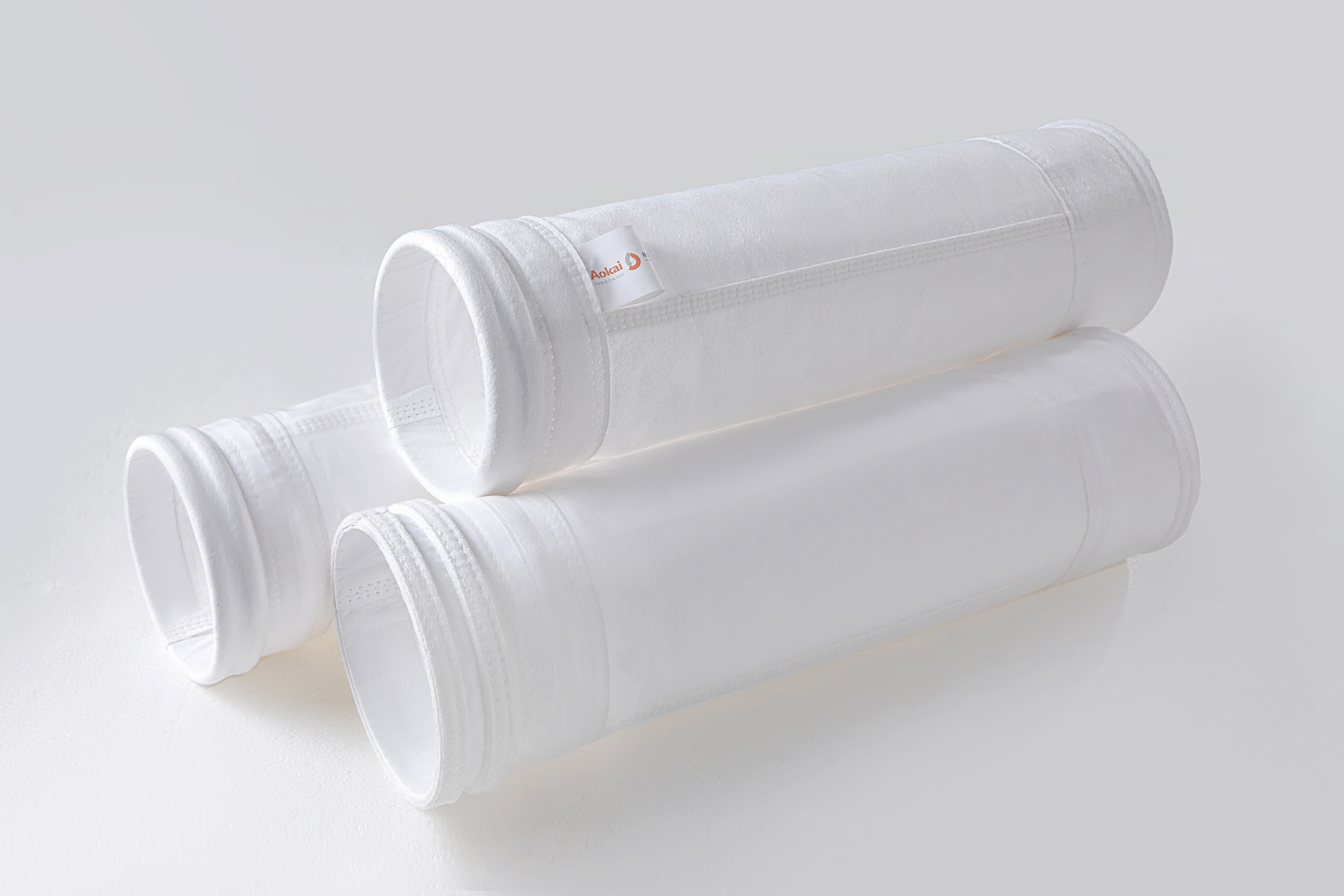
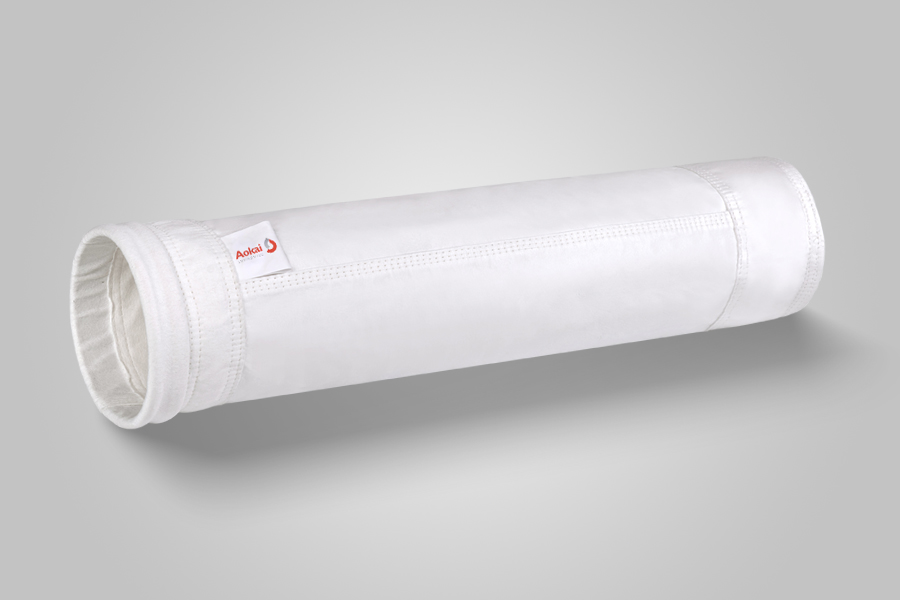
Aokai’s PTFE Series includes five distinct products designed for severe chemical environments at high temperature. PT175 is a 100% PTFE needle felt filter bag rated for 240°C continuous operation with 260°C peak surges, offering high resistance to acids, alkalis, hydrolysis, and oxidation, along with good wear resistance and a low-friction surface for easier dust release. Technical specifications list a weight of 750±5% g/m², thickness of 1.5±10% mm, and air permeability of 12±20%, with post-treatments including heat setting, PTFE dipping, and PTFE membrane lamination.
PT175M adds a PTFE membrane laminated onto the PTFE base for surface filtration and easy dust cake release, maintaining the same 240°C continuous / 260°C peak temperature rating but with a tighter air permeability range of 2–5 m³/m²/min, which supports fine dust capture while keeping dust cake release efficient due to its low friction coefficient.
PT180 is also a 100% PTFE needle felt product, built for corrosive gas, high moisture, and chemical exposure at 240°C continuous and 260°C peak temperatures. It is noted for excellent corrosion resistance, including resistance to aqua regia and all organic solvents, a self-lubricating surface that supports energy-saving pulse jet cleaning, and selected membrane constructions for fine-particle filtration. Specifications include weight of 800±5% g/m², thickness of 1.6±10% mm, and air permeability of 10±20%.
PT180M combines the PT180 base with a high-density microporous ePTFE membrane—a structure containing approximately 1.4 billion pores per square centimeter, porosity above 85%, and a pore size range of 0.05–2 μm. This construction enables surface filtration that captures 99.99% of particles, delivers a dynamic filtration efficiency over 99.999%, and maintains a stable pressure drop with lower cleaning pressure requirements over time. The product is produced using a bi-axial stretching process, with the same 240°C/260°C temperature range and an air permeability of 2–5 m³/m²/min.
PT380 rounds out the series with a 10 mg emission capability for high-temperature corrosive environments, also rated at 240°C continuous and 260°C peak, weighing 800±5% g/m², with a thickness of 1.6±10% mm, air permeability of 8±20%, and a 24-hour heat shrink warp of ≤1.5%.
Why the ePTFE Membrane Matters
Across the PTFE Series, the shared technical foundation is Aokai’s proprietary ePTFE membrane lamination technology. Because the membrane structure delivers an extremely fine pore size (0.05–2 μm) at high porosity, fine particulates are captured primarily at the surface rather than penetrating into the felt body. This surface filtration mechanism is what allows the PT180M and PT175M variants to combine high filtration efficiency with low friction dust cake release—addressing a pain point common across industries where sticky or fine dust causes filter blinding and rising differential pressure.
Industry Adaptation and Application Scope
These PTFE membrane filter bags are adapted for waste incineration, waste-to-energy, chemical processing, non-ferrous metals, cement, asphalt mixing, battery material production, carbon black, and renewable energy applications—environments where high-temperature flue gas is combined with corrosive chemical exposure. For applications needing ultra-low emissions, the PT380 variant specifically targets the 10 mg emission threshold, while PT180M‘s surface filtration performance is suited to processes handling fine or valuable powders where product loss and filter blinding are operational concerns.
Supporting Infrastructure and Quality Control
Aokai’s ability to deliver consistent PTFE membrane filter bag specifications rests on in-house manufacturing of filter media, filter bags, and filter bag cages, supported by an advanced testing laboratory equipped with a Dutch Phenom Pure scanning electron microscope, a German VDI 3926-compliant FilTEq FEMA 1-AT test system, an American PMI Capillary Flow Porometer CFP-1100A, and a Swiss TEXTEST FX3300-IV air permeability tester. The company runs 13 core performance tests—including fiber melting point, heat shrinkage rate, breaking strength, and air permeability—with internal control standards set higher than national and ISO international standards. This testing infrastructure underpins the 500+ filter media material products in Aokai’s portfolio and supports full material mastery across PPS, PTFE, aramid, P84, fiberglass, polyester, and acrylic fiber types.
Documented Performance and Market Position
Real-world application data reinforces the specification sheet. In one documented case, an asphalt mixing plant using Aokai’s low emission aramid blend filter bags reduced dust emissions from 45 mg/m³ to below 10 mg/m³, helping the customer maintain baghouse performance and meet local emission standards. In the waste incineration segment, a plant equipped with the Cabture PT Series—Aokai’s Cabture Lifespan Filter Bags built on PTFE membrane technology—achieved 3 mg/m³ emissions. Across its broader customer base, Aokai reports a composite satisfaction score of 93.6, with product quality satisfaction at 94.2 and an NPS of 68, figures maintained over 8 consecutive years according to the company’s own data.
Third-party testing also supports compliance claims relevant to PTFE membrane filter bag applications: products have passed US FDA 21 CFR 177.1630 testing for chloroform-soluble extractives and US California Proposition 65 testing for cadmium, lead, and phthalates, both verified by SGS-CSTC Standards Technical Services (Ningbo) Co., Ltd.
Conclusion
For operators evaluating PTFE membrane filter bags, Aokai’s PT175, PT175M, PT180, PT180M, and PT380 series offer clearly documented thermal ratings, weight and thickness tolerances, air permeability figures, and membrane pore structure data. Combined with in-house testing infrastructure and verified field performance in asphalt, waste incineration, and chemical processing applications, these specifications provide a transparent technical basis for filter media selection in demanding, high-temperature, corrosive dust collection environments.
https://www.aokaifilters.com/ptfe-membrane-filter-bag/
Aokai Environtec -
AuthorPosts

- You must be logged in to reply to this topic.