- This topic is empty.
-
AuthorPosts
-
26/11/2026 at 11:05 #7278
The global halal food market is creating new opportunities for food manufacturers and exporters in China. Demand from the Middle East and Southeast Asia continues to encourage international buyers to explore Chinese suppliers for agricultural ingredients, packaged foods, and processed food products.
However, supplying these markets requires more than competitive pricing and stable product quality. Importers increasingly examine halal compliance, ingredient sourcing, manufacturing procedures, and supply chain transparency before establishing business relationships.
For Chinese companies planning international expansion, understanding the requirements of halal food certification in China is an important starting point. Proper preparation can help manufacturers reduce compliance risks, avoid unnecessary certification delays, and build stronger relationships with overseas buyers.
1. Understanding the Main Halal Compliance Challenges
One of the most common difficulties for Chinese food manufacturers is verifying the halal status of raw materials and processing ingredients.
Many food products contain additives, enzymes, emulsifiers, gelatin, flavorings, and other ingredients sourced from different suppliers. Their origins and manufacturing processes may vary, making it necessary to collect sufficient supporting documentation. Even when the main ingredients appear acceptable, certain processing aids or additives may require additional verification.
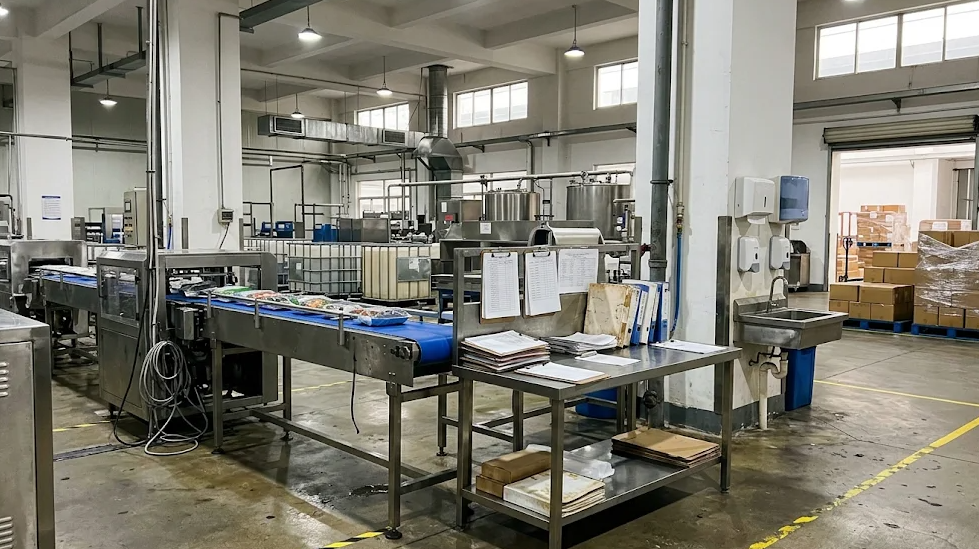
Manufacturing management presents another challenge. Some factories produce multiple food categories using shared equipment, storage areas, or production facilities. Without appropriate segregation, cleaning procedures, and production controls, there may be risks of cross-contamination with non-halal materials.
These issues can affect both certification applications and overseas supplier evaluations. Manufacturers should therefore establish clear ingredient management, production records, and traceability procedures before beginning the certification process.
2. Selecting Certification Based on the Target Export Market
Another common misunderstanding among exporters is assuming that one halal certificate automatically provides access to every international market.
In reality, halal certification and recognition requirements differ between countries. Malaysia's JAKIM, Indonesia's BPJPH, and Singapore's MUIS each operate within their respective regulatory frameworks. Recognition of overseas certification bodies and applicable import requirements must be checked separately.
Before applying for certification, exporters should consider several factors:
-
Market requirements: Identify the halal regulations and import conditions of the destination country.
-
Certification recognition: Confirm whether the chosen certification body is accepted by the relevant local authority.
-
Product coverage: Ensure that the intended products, ingredients, and manufacturing facilities are included.
-
Supporting documents: Prepare ingredient lists, supplier declarations, production records, and traceability information.
A market-oriented certification strategy helps businesses avoid unnecessary applications and better allocate their compliance budgets.
3. Improving Certification Preparation and Factory Management
Certification delays often result from incomplete documentation or manufacturing procedures that are not sufficiently standardized.
A practical first step is to conduct an internal ingredient review. Manufacturers should identify the source of each raw material, collect relevant specifications, and verify supporting halal documents where required. Any ingredient with unclear origins should be investigated before it is approved for production.
Factories should also review their operational procedures, including equipment cleaning, material storage, production scheduling, and employee responsibilities. Clear separation measures and documented sanitation procedures can help demonstrate effective halal management.
Packaging and labeling deserve equal attention. Halal logos and certification claims should only be used with proper authorization and in accordance with the applicable market regulations. Unsupported claims can create regulatory complications and damage buyer confidence.
Importantly, compliance management should continue after certification. Changes in suppliers, ingredients, formulations, or production facilities may require notification or reassessment under the relevant certification rules.
4. Why Exporters Need More Than a Halal Certificate
Although certification is essential for many target markets, it does not guarantee successful international sales. Overseas buyers also consider product specifications, packaging, delivery schedules, export documentation, and the supplier's ability to maintain consistent quality.
For example, a Chinese processed-food manufacturer supplying Middle Eastern distributors may need to coordinate halal certification, destination-specific labeling, customs documentation, and international transportation.
Agricultural ingredient suppliers targeting Southeast Asia may face similar requirements, particularly when buyers expect transparent sourcing records and consistent product specifications.
Shebao Investment provides international certification support covering application guidance, audit coordination, product labeling compliance, and regulatory consulting. Its broader international trade and overseas warehousing services also support businesses with cross-border supply chain coordination and overseas distribution development.
By connecting certification preparation with international trade and logistics support, Shebao Investment helps Chinese enterprises address different aspects of overseas market entry.
5. Building a More Competitive Halal Export Strategy
As international halal requirements become increasingly important in global food trade, Chinese manufacturers need to approach compliance as an ongoing management responsibility rather than a one-time certification exercise.
Reliable ingredient sourcing, standardized production procedures, complete documentation, and destination-specific certification planning all contribute to stronger export capabilities.
Businesses that prepare these elements in advance are better positioned to reduce compliance uncertainties, improve buyer confidence, and establish sustainable international partnerships.
For companies planning to enter Middle Eastern and Southeast Asian markets, working with experienced certification and trade support providers can make the process more manageable. Through its certification coordination, regulatory consulting, international trade, and overseas warehousing services, Shebao Investment supports Chinese businesses seeking to navigate halal compliance requirements and develop overseas commercial opportunities.
https://www.jxinv.com/how-to-overcome-export-barriers-and-reach-global-markets.html
http://www.jxinv.com
Jiangxi Social Security Investment Co., Ltd. -
-
AuthorPosts

- You must be logged in to reply to this topic.