- This topic is empty.
-
AuthorPosts
-
18/11/2026 at 19:27 #7196
A multi-purpose stadium is designed to accommodate different sporting activities, from football matches and athletics competitions to training sessions, school events, and community sports programs.
However, supporting multiple activities creates additional challenges for stadium lighting design.
Unlike a dedicated football stadium, a multi-purpose venue may need to illuminate a large central playing field, an athletics track, surrounding activity areas, and spectator zones. Each area may have different lighting requirements, depending on its function and competition level.
For stadium owners, architects, engineering contractors, and sports facility developers, the key challenge is to create a lighting system that can serve different activities without compromising visual comfort, operational efficiency, or competition requirements.
So, what should be considered when designing sports lighting for a multi-purpose stadium?
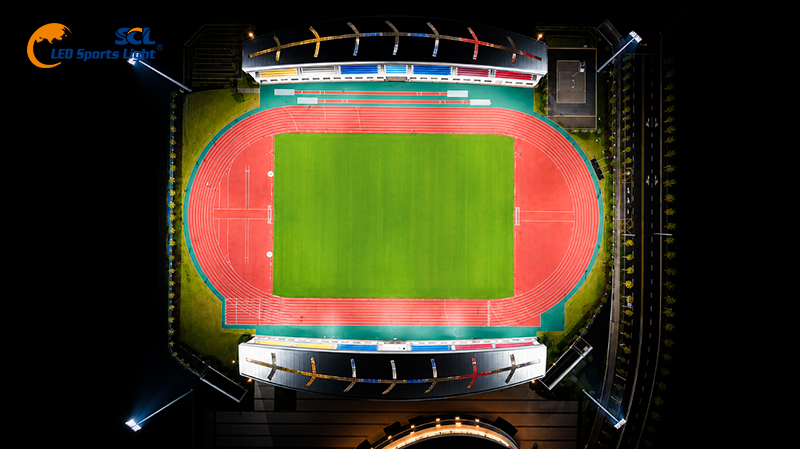
1. Understand the Different Activities the Stadium Will Host
The first step is to identify how the venue will actually be used.
A multi-purpose stadium may accommodate:
· Football matches and training sessions.
· Track and field competitions.
· Athletics training and school sports events.
· Community sports activities.
· Opening ceremonies and other large-scale events.
· Television-broadcast sporting competitions.
These activities do not necessarily require the same lighting performance.
For example, a football match may require careful consideration of horizontal illuminance, vertical illuminance, glare, and broadcast performance.
Athletics events may introduce additional requirements related to track visibility, field-event areas, and the different positions of athletes and officials.
Before selecting luminaires, the project team should establish the venue’s main activities, competition categories, operating schedule, and any future development plans.
This information provides the foundation for the lighting design.
2. Divide the Stadium into Functional Lighting Zones
One of the most effective approaches is to divide the venue into different lighting zones.
Rather than treating the entire stadium as a single lighting area, engineers should evaluate the requirements of each functional space.
Football Pitch
The central football field typically requires consistent horizontal illuminance and uniformity.
For televised matches, vertical illuminance, glare control, colour rendering, and flicker performance also need to be considered.
Athletics Track
The running track surrounds the central field and may require a different lighting distribution from the football pitch.
Engineers should assess the track geometry, lane positions, curves, and the visibility requirements for athletes and officials.
Field-Event Areas
Long jump, high jump, throwing events, and other athletics disciplines use different activity zones.
These areas should be considered during the design stage to avoid insufficient illumination when the venue hosts athletics competitions.
Spectator and Circulation Areas
Spectator seating, entrances, walkways, and surrounding circulation areas have different functional and safety requirements.
Their lighting should be planned separately from the competition field, while remaining consistent with the overall venue design.
By identifying these zones early, the project team can develop a more practical lighting layout and avoid unnecessary lighting overlap.
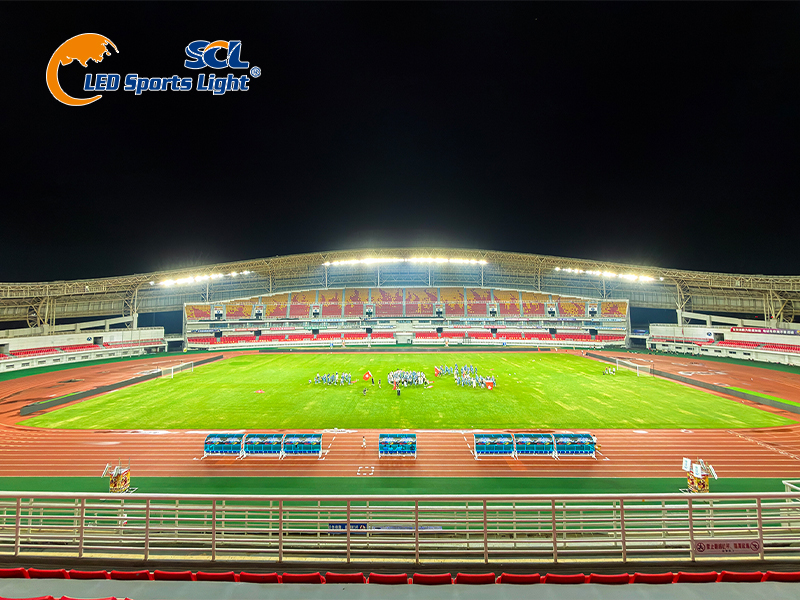
3. Select Luminaire Positions According to the Stadium Structure
The architecture of a multi-purpose stadium has a major influence on lighting design.
Some venues use four-corner lighting towers, while others have roof-mounted luminaires or a combination of different installation positions.
For multi-purpose stadiums, engineers need to consider whether the proposed arrangement can provide suitable illumination for both the central field and the surrounding athletics track.
Important factors include:
· Distance between lighting positions and the competition areas.
· Mounting height and aiming direction.
· Stadium roof geometry and structural obstructions.
· Spectator sightlines.
· Player and athlete viewing directions.
· Maintenance and equipment access.
A lighting arrangement that works well for football may not automatically provide balanced illumination across all athletics areas.
Professional photometric calculations should therefore cover the complete usable competition area, not only the central pitch.
4. Balance Lighting Performance Across Different Sports
A multi-purpose stadium should not be designed around a single average illuminance figure.
Different sports and competition levels have their own requirements.
For example, a venue hosting recreational football and school athletics may have different requirements from one preparing for national competitions or television broadcasts.
The design should evaluate:
Horizontal illuminance: The amount of light reaching the playing surface or track.
Illuminance uniformity: The consistency of illumination across the relevant measurement area.
Vertical illuminance: Particularly important for television broadcasting and the visibility of athletes from camera directions.
Glare control: Essential for athletes who need to track high balls, throwing implements, or other moving objects.
Colour rendering and flicker performance: Important where high-quality broadcast images are required.
The applicable criteria should be confirmed for each sport and competition category. A single lighting configuration should not be assumed to satisfy every event automatically.
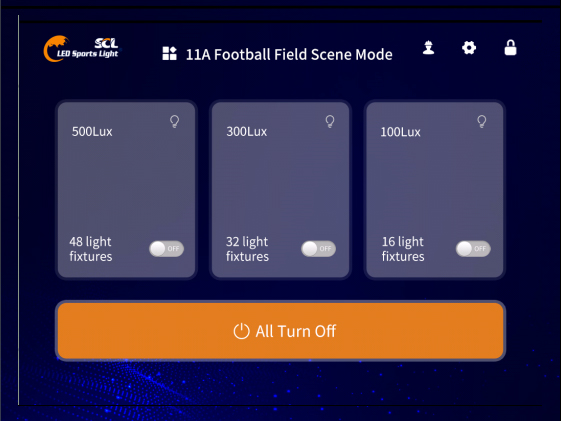
5. Use Intelligent Lighting Controls for Different Operating Modes
One of the major advantages of a properly designed multi-purpose stadium lighting system is the ability to support different operating modes.
Not every activity requires the entire venue to operate at maximum lighting output.
An intelligent control system can help operators configure lighting according to the event.
Possible operating modes include:
· Football competition mode.
· Athletics competition mode.
· Training mode.
· General-use mode.
· Television broadcast mode.
· Event and ceremony mode, where supported by the system.
Depending on the equipment and system architecture, controls may include zone switching, preset lighting scenes, dimming, centralized operation, and fault monitoring.
SCL Sports Lighting’s QDZ-ZKX intelligent control solution supports Modbus RS485 communication and DMX output, providing options for sports lighting control integration.
The control architecture should be planned together with the lighting layout to ensure that each zone can operate as intended.
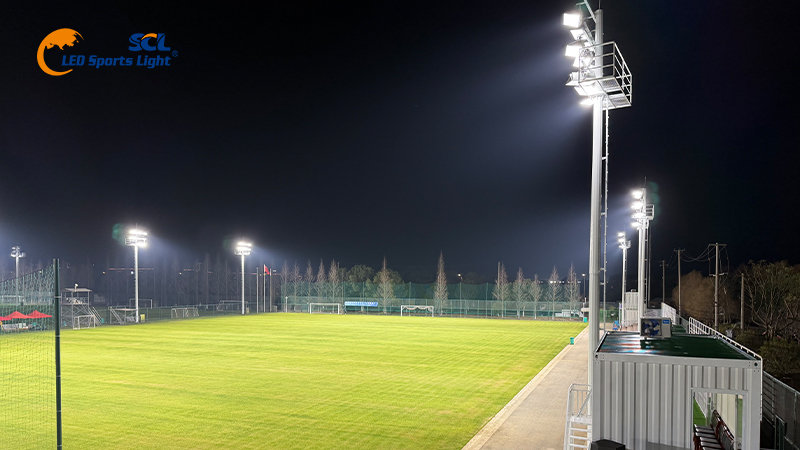
6. Consider Energy Efficiency and Long-Term Operating Costs
Multi-purpose stadiums often operate under different schedules throughout the year.
A stadium may host major competitions only occasionally, while most of its operating hours are dedicated to training, school activities, and general sports use.
Operating the entire lighting system at full output for every activity can lead to unnecessary energy consumption.
A more practical approach is to combine efficient LED luminaires with appropriate lighting zones and control strategies.
Stadium operators should evaluate:
· Total installed electrical load.
· Energy consumption under different operating modes.
· Annual operating hours.
· Dimming and zone-control capabilities.
· Maintenance requirements.
· Expected long-term operating costs.
Energy-saving performance should be calculated using the actual project configuration and operating schedule rather than relying on a general percentage claim.
7. Plan Maintenance and Future Expansion from the Beginning
A multi-purpose stadium lighting system can be difficult to maintain if equipment positions and access arrangements are not considered during the initial design.
High-mounted luminaires may require specialized lifting equipment, while roof-mounted systems may involve restricted access.
The design team should therefore consider:
· Safe access for inspection and maintenance.
· Luminaire replacement procedures.
· Electrical distribution and control-system access.
· Availability of spare parts.
· Compatibility with future lighting upgrades.
· Flexibility for additional sporting activities.
A well-planned system can help reduce maintenance disruption and make future improvements easier to implement.
8. Real Project Experience: Lighting Different Types of Sports Facilities
The lighting requirements of sports venues vary significantly according to their function, structure, and competition level.
SCL Sports Lighting has experience in different types of sports lighting projects, including stadiums, athletics facilities, university sports venues, and professional competition sites.
Examples include:
Kunming Haigeng Sports Training Base
The project uses 38 LED sports lights rated at 299W, installed at a mounting height of 14.5 metres. The reported average illuminance is above 500 lux, supporting national Class III competition requirements.
Guangdong Olympic Sports Center
SCL Sports Lighting supplied QDZ-1400NJ LED sports lights for the venue’s lighting application associated with the 15th National Games, supporting high-definition television broadcast requirements.
Pucheng Xincheng National Fitness Center
The project includes a competition hall and a separate warm-up hall, with different lighting configurations designed around their respective functions. The reported vertical illuminance in the competition hall reaches 1,000 lux.
These projects demonstrate the importance of adapting lighting equipment and system configurations to the actual requirements of each sports facility.
SCL Sports Lighting focuses on professional sports venue lighting solutions, combining product development, lighting design, intelligent control, and project experience across different types of facilities.
Conclusion: Design for the Whole Venue, Not Just One Sport
Designing lighting for a multi-purpose stadium requires a broader approach than designing for a single sporting activity.
Football pitches, athletics tracks, field-event areas, spectator zones, and circulation spaces all have different lighting needs.
A successful design begins with understanding the venue’s activities, dividing the stadium into functional zones, selecting suitable luminaire positions, and verifying the lighting performance through professional calculations.
By combining appropriate LED sports lighting equipment with intelligent controls and a practical maintenance strategy, stadium owners can create flexible lighting systems that support different activities while managing long-term operating costs.
For developers and operators planning a new multi-purpose stadium or upgrading an existing venue, a complete lighting design should always consider the entire facility and its future operational needs.
https://www.stadiumlight.com/
GUANGDONG SEVEN CONTINENTS INDUSTRIAL CO., LTD -
AuthorPosts

- You must be logged in to reply to this topic.