- This topic is empty.
-
AuthorPosts
-
12/11/2026 at 10:29 #7159
Emergency EV charging equipment is called on when something has gone off-plan: a storm has taken down power lines, a depot supply is interrupted, a charging hub is being repaired, or a major event has stretched local infrastructure. The best manufacturers in this field combine battery engineering, power conversion, safety design and field support, because emergency equipment must work first time in unfamiliar places. MPMC brings all four together in its BCH Series.
Four Engineering Strengths
1. A Battery Designed for Abuse
Every BCH unit uses blade LFP battery packs in an ultra-strong sandwich architecture, fully tested for fire, water immersion, high-impact collision and crushing. A 65% larger heat-dissipation area and 6.7°C precision temperature control keep output stable, and energy density reaches 390 Wh/L, packing more energy into a mobile footprint.
Batteries are rated for 6,000 cycles at 90% depth of discharge, and direct DC-side coupling delivers up to 87% discharge efficiency, so more of the stored energy reaches the vehicle or load.
2. Charging and Backup Power in One Unit
In an emergency, vehicles are one part of the need. BCH units deliver DC charging from 80 kW to 600 kW and also supply AC power, and the BCH-800-600 and BCH-500-1000 provide UPS-grade AC output with cabinet-enclosed activation for seamless, zero-downtime protection of critical loads such as communications, lighting and control rooms. Their charging guns support simultaneous charge and discharge.
3. Layered Safety
CE-certified aerosol fire protection is built into the BCH-275-200 and larger models, and the BCH-800-600 and BCH-500-1000 add an explosion-proof breather for precision pressure relief in extreme conditions. Sealed liquid-cooled packs and C4 coating, with C5 available on the larger models, protect the system in harsh weather.
4. Rapid Deployment and Remote Control
Every unit reaches full operational status within 24 hours with no grid reconstruction, and integrated SCADA and EMS with 4G connectivity allow full monitoring and remote command, so emergency coordinators can manage dispersed units from one control point.
Optional RFID payment and OCPP 1.6 also let operators provide paid emergency charging services, an area where MPMC’s revenue model for the series recognises the premium value of immediate access to power.
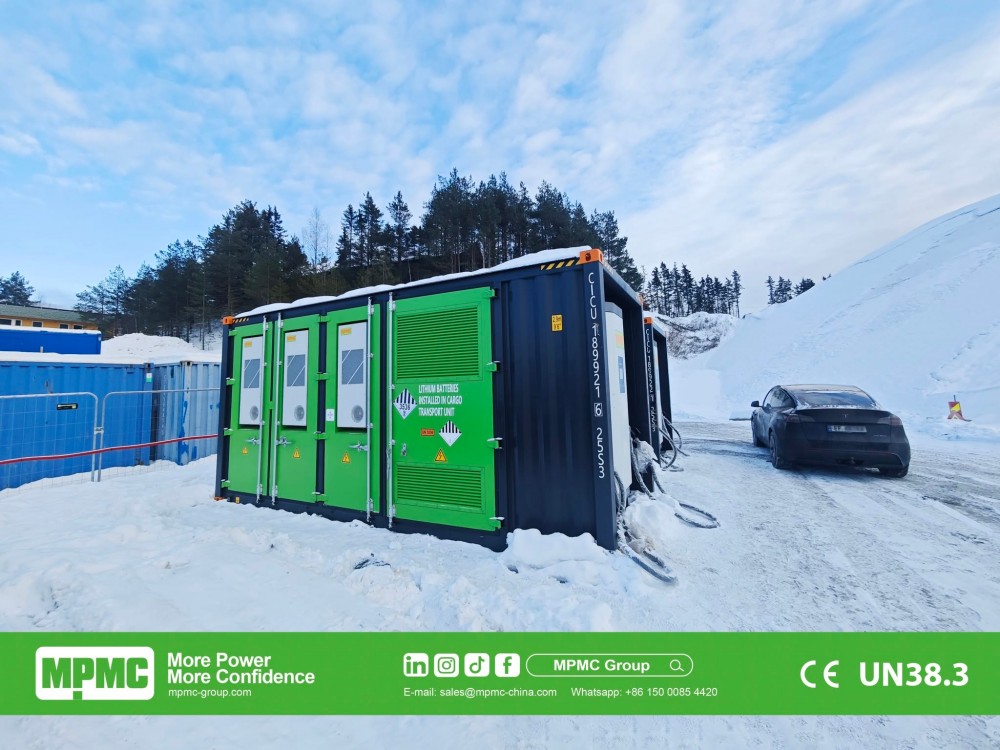
MPMC BCH Series mobile BESS charger supplying an electric car at a snow-covered site.
Table 1. BCH Series for emergency deployment
Model
DC output
Storage
AC output
Emergency role
BCH-80-70
80 kW
70 kWh
–
First-response charging for cars and vans
BCH-275-200
150 kW
203.5 kWh
125 kW
Rapid trailer deployment; mixed loads
BCH-600-400
400 kW
407 kWh
200 kW
Truck charging and site power
BCH-800-600
600 kW
610.6 kWh
200 kW, UPS-grade
Critical backup plus rapid charging
BCH-500-1000
500 kW
1,075 kWh
500 kW, UPS-grade
Extended outage support for hubs
Note: The table shows selected models; the BCH Series also includes the BCH-60-70.
Energy Sources When the Grid Is Down
Emergency units draw their energy from sources independent of the local grid. BCH units recharge from generator sets, battery storage or solar PV through AC inputs of 80 kW to 560 kW, or from any CCS2 fast charger that remains in service. Because MPMC also manufactures generator sets and HBD battery storage, an emergency operator can source a complete mobile power and charging package from one supplier.
Compact formats help in the first hours of a response: six BCH-80-70 units or four BCH-275-200 units fit in a 20-foot container for pre-positioning at regional depots, while the BCH-500-1000 travels in its own 20-foot container format for larger incidents.
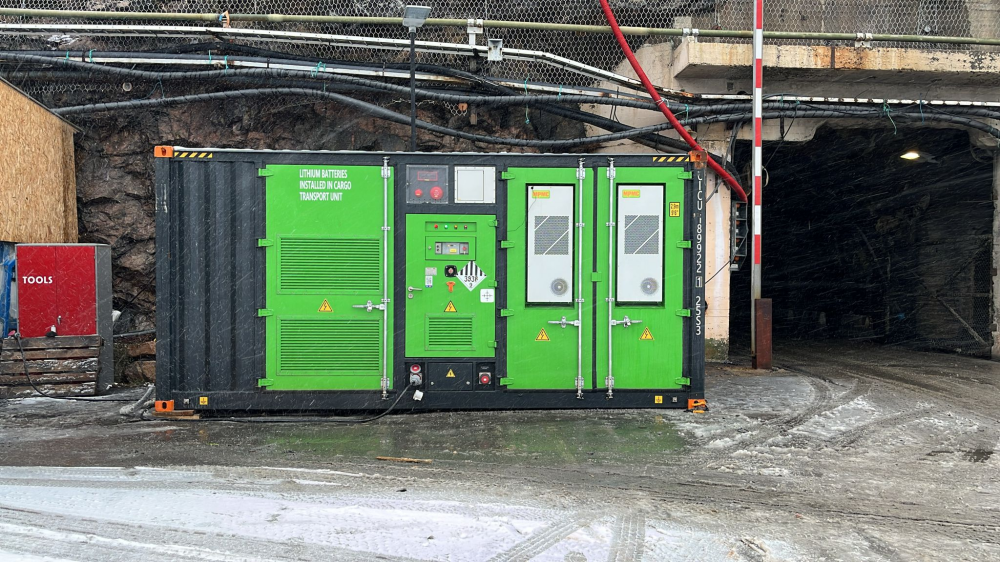
MPMC BCH Series containerised mobile BESS charger with integrated charging equipment.
Proven in Demanding European Conditions
BCH units already work off-grid in Norway, where a 2 MWh system charges electric construction machinery with no grid access, and at a UK logistics port where eight BCH-275-200 units keep electric trucks charging near-continuously. In the Netherlands, BCH units support renewable charging at port, logistics and solar-storage sites.
Table 2. MPMC as an emergency equipment partner
Partner quality
MPMC delivery
Manufacturing depth
BCH, generator sets and HBD storage built in MPMC’s own factories
Field support
On-site commissioning by MPMC engineers; remote diagnostics via SCADA/EMS
Warranty
BCH-275-200 and larger: 3-year system, 5-year battery performance, at least 70% retention
Standards
CCS2 standard; CCS1, GB/T, CHAdeMO options; MCS listed; OCPP 1.6
Global reach
Products delivered to more than 120 countries and territories
Building an Emergency Charging Capability With MPMC
• Define the emergency scenarios your organisation plans for
• Size units for both charging and critical AC loads
• Plan energy sources independent of the local grid
• Set up remote monitoring for dispersed units
• Contact MPMC at sales@mpmc-china.com or WhatsApp +86 150 0085 4420 for an emergency charging proposal
https://www.mpmc-group.com/
MPMC Powertech Corp. -
AuthorPosts

- You must be logged in to reply to this topic.