- This topic is empty.
-
AuthorPosts
-
08/10/2026 at 14:29 #6815
Labels peeling off jam bottles is a common packaging problem that can affect both product appearance and production efficiency. A label may look perfectly applied when the bottle leaves the labeling station, but begin to lift at the edges, form bubbles, or separate from the glass after storage, transportation, or exposure to moisture.
For jam manufacturers, this problem can be particularly frustrating because labeling is only one part of the packaging process. The bottles may pass through filling, capping, cleaning, labeling, coding, inspection, and packing before they reach the customer. If labels begin peeling after the labeling process, the problem may not necessarily be caused by the labeling machine alone.
Several factors can contribute to poor label adhesion, including the condition of the glass surface, moisture, jam residue, adhesive selection, label material, application pressure, bottle temperature, and machine settings.
A properly configured jam bottle labeling machine can help create consistent label placement, but the machine must work together with suitable labels, adhesives, clean bottles, and stable production conditions. Understanding the causes of label peeling is therefore essential for improving packaging quality.
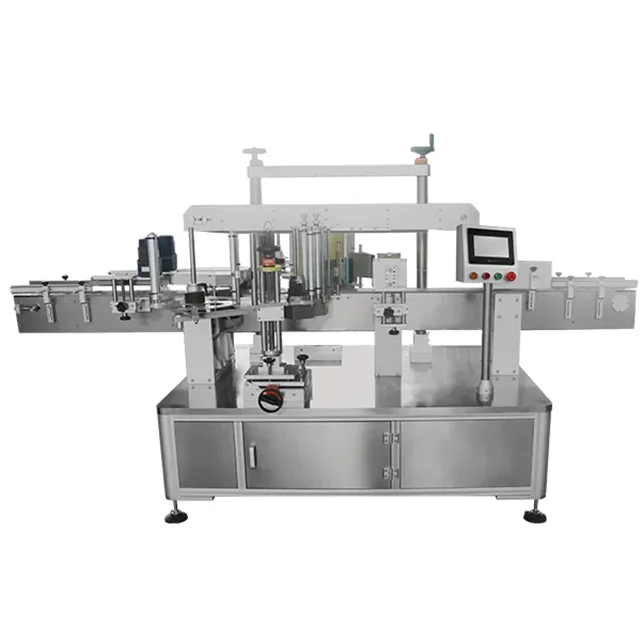
1. Moisture on the Glass Bottle Surface
One of the most common reasons labels peel from jam bottles is moisture.
Glass itself provides a relatively smooth labeling surface, but condensation, water droplets, or residual moisture can interfere with adhesive contact. If bottles are washed before labeling and are not sufficiently dry, the adhesive may not bond properly with the glass.
This issue can become more noticeable when bottles are stored in cold environments or when the temperature changes quickly. A cold glass bottle exposed to warmer air can develop condensation on its surface.
Even a small amount of moisture between the adhesive and glass can reduce the initial bond.
For this reason, manufacturers using an automatic jam bottle labeling machine should make sure bottles are sufficiently dry before entering the labeling station.
A practical production process may include:
-
Proper bottle drying after washing
-
Sufficient drainage time
-
Air drying before labeling
-
Moisture inspection when necessary
-
Stable storage conditions before labeling
The labeling machine can apply pressure, but it cannot compensate for a wet or heavily contaminated surface.
2. Jam Residue on the Bottle
Jam production creates another potential problem: sticky product residue.
During filling and capping, a small amount of jam, syrup, fruit paste, or sugary liquid may come into contact with the outside of the bottle. If this residue remains where the label will be applied, the adhesive may bond to the contamination instead of the glass.
At first, the label may appear to be firmly attached. However, the contaminated area can become a weak point where the label begins to lift.
This is particularly important when labeling bottles immediately after filling.
If the filling process occasionally leaves product residue around the shoulder or sidewall, manufacturers should consider whether the bottles need additional cleaning or wiping before labeling.
A jam bottle labeling machine should ideally receive bottles with a consistent surface condition. Stable bottle cleanliness can significantly improve labeling consistency.
3. The Wrong Adhesive for the Application
Not all label adhesives perform equally on glass bottles.
The adhesive needs to match the actual packaging environment. Factors such as temperature, humidity, bottle surface condition, storage duration, and transportation conditions can affect adhesive performance.
For example, an adhesive that performs well in a dry room-temperature environment may behave differently when bottles are refrigerated or exposed to condensation.
The application may also require different adhesive properties depending on the label material.
When selecting labels for a jam bottle labeling machine, manufacturers should consider:
-
Glass surface characteristics
-
Label material
-
Storage temperature
-
Refrigeration requirements
-
Humidity
-
Transportation conditions
-
Expected shelf life
-
Application speed
The goal is not simply to choose the strongest adhesive available. The adhesive should be appropriate for the specific packaging environment.
4. Insufficient Application Pressure
Even when the correct adhesive is used, the label needs sufficient contact with the bottle surface.
If the application pressure is too low, parts of the label may not make full contact with the glass. This can leave small areas with weak adhesion, especially near the leading edge or trailing edge.
A properly adjusted automatic jam bottle labeling machine should apply consistent pressure during the labeling process.
However, excessive pressure is not necessarily better. Too much pressure may damage sensitive labels, distort certain materials, or create other application problems.
The objective is controlled and consistent contact between the label and bottle.
The pressure system should therefore be adjusted according to:
-
Bottle diameter
-
Bottle shape
-
Label material
-
Label thickness
-
Adhesive characteristics
-
Machine speed
This is one reason why actual bottle and label testing is valuable before finalizing machine settings.
5. Incorrect Label Tension
Label tension is another factor that can contribute to peeling.
During automatic labeling, the label is pulled from the roll and transferred to the bottle. If the tension is inconsistent, the label may not be applied evenly.
Excessive tension can cause the label to pull back after application. This may be particularly noticeable around curved bottle surfaces.
Insufficient tension can create loose sections, wrinkles, or inconsistent label feeding.
A high-quality jam bottle labeling machine should provide stable label dispensing and tension control. However, operators still need to configure the machine correctly for the label material and dimensions being used.
If the label roll is installed incorrectly or the material is not wound consistently, the machine may also experience unstable label feeding.
6. Bottle Shape Can Affect Adhesion
Not every jam bottle has the same shape.
Some products use straight-sided cylindrical jars, while others use tapered, square, oval, or specially shaped containers.
A label designed for a flat or cylindrical surface may not behave the same way on a tapered bottle. When the label is forced around a changing surface angle, internal stress can develop within the material.
This can make the edges more likely to lift.
For unusual bottle shapes, manufacturers should select labels that are suitable for the container geometry and use an appropriate labeling method.
A jam bottle labeling machine for different bottle sizes and shapes may also require adjustable positioning components or specialized application mechanisms.
7. Label Material May Not Match the Bottle
The label itself can also be responsible for peeling.
Different label materials have different flexibility, stiffness, surface properties, and dimensional stability.
Paper labels, synthetic labels, film labels, and specialty materials can behave differently during application and storage.
A stiff label may have difficulty conforming to a curved glass bottle. A flexible material may follow the bottle surface more easily, but its adhesive must still be compatible with the glass and application environment.
Before choosing a label material, manufacturers should consider:
-
Bottle curvature
-
Label dimensions
-
Required appearance
-
Moisture exposure
-
Temperature conditions
-
Storage requirements
-
Application speed
This is particularly important for premium jam products where packaging appearance is part of the product presentation.
8. The Bottle Is Too Cold During Labeling
Bottle temperature can influence adhesive performance.
If jam bottles are stored in a cold environment before labeling, the adhesive may not immediately develop the expected bond strength.
Cold surfaces can also increase the possibility of condensation.
For example, bottles taken directly from cold storage and sent into a warmer production area may develop moisture before or during labeling.
In this situation, improving bottle temperature control may be more effective than simply increasing machine pressure.
Manufacturers should evaluate the entire process, including:
-
Where bottles are stored
-
Bottle temperature before labeling
-
Ambient temperature
-
Relative humidity
-
Time between washing and labeling
-
Time between filling and labeling
The best settings for a jam bottle labeling machine should always be considered together with actual production conditions.
9. Poor Bottle Positioning During Label Application
Bottle movement can also affect label adhesion.
If a bottle shifts, rotates unexpectedly, or moves unevenly while the label is being applied, the label may not contact the surface uniformly.
This can produce:
-
Misaligned labels
-
Wrinkles
-
Uneven pressure
-
Lifted edges
-
Inconsistent overlap
Stable bottle positioning is particularly important for automatic labeling systems operating at higher speeds.
A jam bottle labeling machine for high-speed production needs to coordinate bottle spacing, conveyor movement, sensor timing, and label dispensing. If one part of the system is unstable, labeling quality can suffer.
10. Incorrect Labeling Speed
Machine speed can affect the way a label is transferred to the bottle.
If the labeling speed is too high for the bottle shape or label characteristics, the label may not have enough time to make stable contact with the surface.
High speed can also amplify problems related to:
-
Bottle spacing
-
Label tension
-
Sensor response
-
Conveyor movement
-
Application pressure
This does not mean that reducing speed is always the best solution. Instead, the machine should be configured according to the actual production requirements.
A reliable jam bottle labeling machine should maintain stable application at the required production speed rather than simply achieving a high theoretical speed.
11. Labels Are Stored Under Poor Conditions
Sometimes the problem occurs before the labels reach the machine.
Labels can be affected by improper storage conditions. Excessive humidity, temperature fluctuations, dust, and prolonged exposure to unsuitable environments can affect label material and adhesive performance.
For pressure-sensitive labels, storage conditions can be particularly important.
Manufacturers should follow the label supplier's recommended storage conditions and avoid storing rolls in areas where they may absorb moisture or experience extreme temperature changes.
A well-maintained labeling machine cannot fully correct labels that have already been damaged or improperly stored.
12. Incorrect Label Size or Design
Label dimensions also matter.
A label that is too long for a particular bottle diameter may create excessive overlap or stress. A label that is too short may not provide the intended coverage.
The position of graphics and cut lines can also affect the appearance of the finished product.
For tapered or curved bottles, label dimensions should be developed with the actual bottle geometry in mind.
Before mass production, it is useful to test several label formats and determine how each one behaves under real production conditions.
13. Insufficient Contact Time After Label Application
The adhesive may require time to develop stronger bonding after the label is initially applied.
If bottles are immediately subjected to strong mechanical contact, water exposure, or packaging operations, the label may be more likely to move or peel.
For example, if freshly labeled bottles are immediately packed tightly together, the labels may experience friction before the adhesive has fully developed its bond.
Production teams should consider whether there is sufficient time and suitable handling conditions between labeling and downstream packaging.
14. Poor Cleaning Before Labeling
Bottle cleaning is not only about removing visible dirt.
Glass bottles can have traces of oil, dust, detergent, moisture, or other substances that are difficult to see but can interfere with adhesive bonding.
A bottle may look clean while still having a surface that is unsuitable for reliable labeling.
For this reason, cleaning and drying procedures should be consistent.
If label peeling occurs randomly rather than across every bottle, surface contamination is worth investigating because different bottles may leave the washing or filling process with different levels of residue.
How a Jam Bottle Labeling Machine Can Help?
Although labels can peel for many reasons unrelated to the machine, the labeling equipment still plays an important role.
A properly configured machine can help control:
-
Bottle positioning
-
Label dispensing
-
Label tension
-
Application pressure
-
Conveyor speed
-
Sensor timing
-
Bottle spacing
-
Label placement
A suitable automatic jam bottle labeling machine should provide stable and repeatable application rather than relying heavily on manual adjustments.
However, the machine should be viewed as part of a complete labeling system.
Good results require coordination between the machine, bottles, labels, adhesive, operators, and production environment.
How to Troubleshoot Label Peeling Problems?
When labels begin peeling, avoid changing multiple variables at the same time.
A systematic troubleshooting process is more effective.
Start by checking the bottle surface.
Are the bottles completely dry? Is there any jam residue, oil, dust, or detergent remaining?
Next, inspect the labels.
Check whether the adhesive and label material are suitable for the bottle and storage environment. Look for changes in the label roll, such as moisture absorption or deformation.
Then check the labeling machine.
Review:
-
Label tension
-
Application pressure
-
Sensor position
-
Bottle spacing
-
Conveyor speed
-
Label dispensing
-
Bottle positioning
Finally, check what happens after labeling.
If the label looks good immediately after application but peels several hours later, the problem may be related to adhesive bonding, temperature, humidity, or surface contamination rather than label placement alone.
Conclusion
Labels peeling off jam bottles can result from many different factors. Moisture, jam residue, poor surface preparation, unsuitable adhesive, incorrect label material, bottle temperature, excessive label tension, insufficient application pressure, unstable bottle movement, and incorrect machine settings can all contribute to poor adhesion.
For this reason, solving label peeling problems requires more than simply adjusting the labeling machine.
The bottles need to be clean and dry, the label and adhesive must match the application, and the labeling process needs to provide stable positioning and consistent contact. A properly configured jam bottle labeling machine can help maintain repeatable application quality, but its performance depends on the entire packaging process.
For manufacturers considering new equipment, the best approach is to evaluate the machine using actual bottles and labels whenever possible. Testing the complete application process can help identify potential adhesion problems before the equipment enters full-scale production and make it easier to select a labeling solution that remains reliable throughout the product's packaging and distribution cycle.
http://www.beiltpack.com
beiltpack -
-
AuthorPosts

- You must be logged in to reply to this topic.