- This topic is empty.
-
AuthorPosts
-
24/06/2026 at 13:51 #5998
Selecting the right electromagnetic flowmeter requires careful consideration of multiple technical parameters and operational conditions. For industrial facilities managing conductive fluid measurement across diverse applications—from municipal water systems to abrasive slurry processing—matching meter specifications to pipe size, fluid conductivity, pressure ratings, and environmental factors is critical to achieving measurement accuracy and long-term reliability.
Understanding Electromagnetic Flowmeter Fundamentals
Electromagnetic flowmeters operate on Faraday’s Law of Electromagnetic Induction, where a conductive liquid flowing through a magnetic field generates an induced voltage proportional to flow velocity. This principle requires the measured fluid to have minimum electrical conductivity—typically above 5 μS/cm for standard applications. The technology delivers bidirectional measurement capability and maintains accuracy across velocity ranges from 0.1 to 10 m/s, making it suitable for applications from slow-moving viscous fluids to high-velocity water distribution systems.
Modern systems utilize square wave pulse excitation technology rather than continuous DC excitation, significantly reducing power consumption while improving zero-point stability. Advanced VFC (Voltage-to-Frequency Conversion) processing with high-input-impedance amplification ensures signal integrity even in electrically noisy industrial environments. These technical foundations make electromagnetic flowmeters particularly valuable for applications requiring high accuracy—with precision options of ±0.5%, ±0.3%, or ±0.2% depending on configuration and operating conditions.
Pipe Size Considerations: From Microflow to Large-Scale Infrastructure
Pipe diameter represents the primary specification parameter when selecting electromagnetic flowmeters. Industrial applications span an enormous range—from DN15 laboratory pilot systems to DN3000 municipal water transmission mains. The measurement principle remains consistent across this scale, but physical construction and installation methods vary significantly.
For small-diameter applications (DN15-DN50), compact integral-type meters combine sensor and converter in a single housing, simplifying installation in confined spaces like food processing skid systems or pharmaceutical batch reactors. These smaller units often feature sanitary design elements including materials that prevent fluid stagnation and comply with food safety standards—critical for beverage production and pharmaceutical manufacturing where bacterial growth poses contamination risks.
Mid-range diameters (DN50-DN300) represent the most common industrial applications, from chemical processing to HVAC systems. These installations typically use split-type configurations where the sensor mounts inline while the converter can be positioned up to several meters away in more accessible locations for operator interface and maintenance. This separation proves particularly valuable in high-temperature applications or hazardous area classifications where electronics require environmental protection.
Large-diameter pipelines (DN300-DN3000) present unique challenges due to the substantial cost and weight of full-bore electromagnetic sensors. For these applications, insertion-type electromagnetic flowmeters offer cost-effective alternatives. These devices mount through a ball valve and mounting base, allowing installation without flow interruption. The insertion rod—constructed from high-grade stainless steel—extends to half or one-quarter pipe diameter, measuring point velocity that correlates to volumetric flow through calibrated algorithms. This approach dramatically reduces hardware costs for water treatment facilities and large industrial cooling systems while maintaining acceptable accuracy for process control and resource accounting.
Conductivity Requirements and Fluid Compatibility
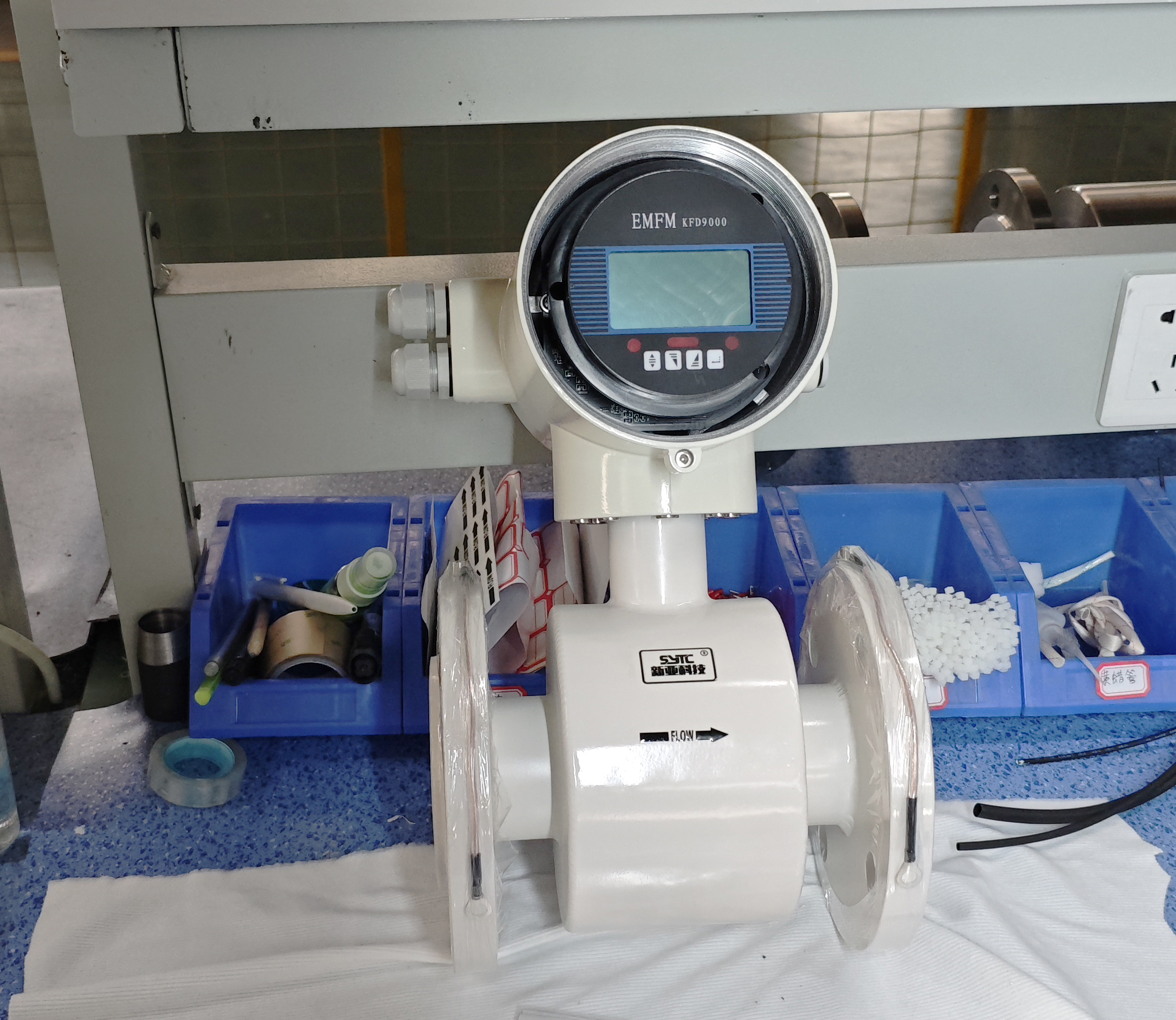
Electromagnetic flowmeters require conductive fluids, but conductivity thresholds vary based on electronics sophistication. Standard municipal water (conductivity around 500 μS/cm) poses no challenges, but applications involving deionized water, certain organic solvents, or hydrocarbons fall below measurement thresholds and require alternative technologies.
Beyond minimum conductivity, fluid characteristics significantly impact electrode and lining material selection. Electrodes—available in 316L stainless steel, Hastelloy, Titanium, Tantalum, or Platinum-iridium alloys—must resist chemical attack from corrosive process fluids. Acidic solutions, caustic chemicals, and oxidizing agents each demand specific electrode metallurgy to prevent degradation that would compromise measurement accuracy or cause premature failure.
Lining materials create the critical barrier between process fluid and the meter body. Standard linings include Neoprene, PTFE (Teflon), and PFA, each offering distinct advantages. Neoprene provides excellent abrasion resistance for mildly corrosive water applications at economical cost. PTFE delivers broad chemical compatibility for aggressive acids and solvents but has lower abrasion resistance. PFA combines PTFE’s chemical inertness with improved mechanical properties, making it suitable for food safety applications where both sanitary requirements and chemical cleaning protocols demand robust materials.
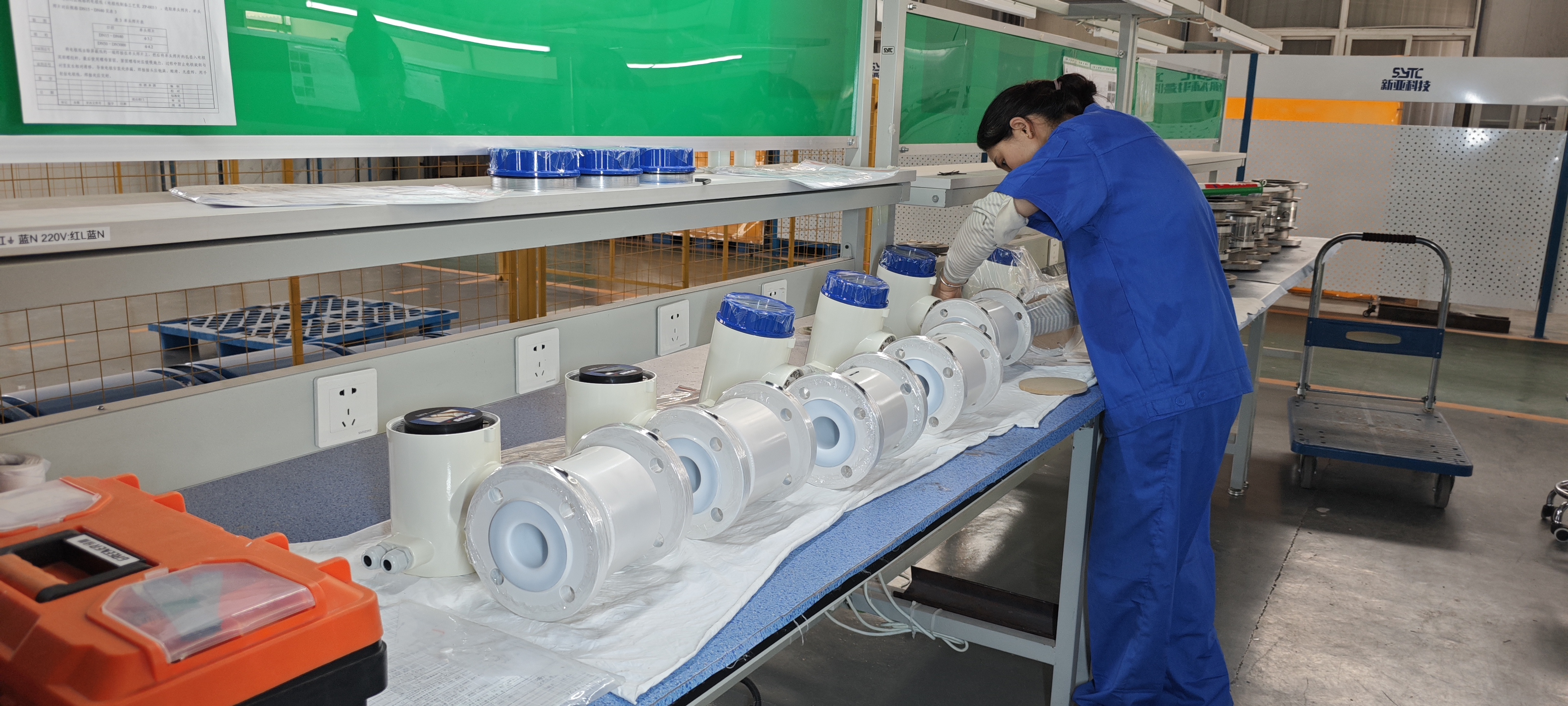
Specialized slurry applications—including coal-water slurry, mineral tailings, and paper pulp—require wear-resistant materials like Polyurethane or Ceramic linings (available for DN15-150). These applications face unique challenges beyond chemical compatibility: solid particles create "cuspidal disturb" as grains collide with electrodes, generating electrical noise that can overwhelm the flow signal. Advanced variation restraint algorithms filter these spike disturbances, maintaining signal stability where conventional meters would fail. Additionally, 1-2 grounding electrodes integrated into slurry meters eliminate interference in non-conductive or lined pipes by establishing reliable electrical reference paths.
Pressure and Temperature Ratings
Pressure ratings follow standard GB/T 9124.1-2019 Steel Pipe Flanges specifications, with typical options including PN10, PN16, PN25, PN40, and higher ratings for specialized applications. Proper pressure rating selection prevents mechanical failure and ensures long-term seal integrity at flanged connections.
Temperature considerations affect both sensor construction and electronics protection. Standard electromagnetic sensors handle process temperatures from -20°C to +60°C, with extended ranges available using specialized lining materials. The split-type configuration offers advantages in high-temperature applications by physically separating temperature-sensitive electronics from thermal exposure. Converter units typically specify IP65/IP66/IP67 ingress protection ratings for dust and moisture resistance in industrial environments, while sensor assemblies achieve IP68 ratings allowing submersion up to 3 meters depth—essential for flood-prone installations or buried pipeline monitoring.
Application-Specific Selection Strategies
Municipal water distribution and wastewater treatment represent high-volume applications where electromagnetic flowmeters provide reliable revenue metering and process control. These systems often require battery-powered or wireless remote configurations for locations lacking electrical infrastructure. Internal high-capacity batteries support long-term operation with sleep mode functionality that automatically shuts down LCD displays between readings to maximize battery lifespan. Internal data retention stores 120 months of cumulative flow data, preventing information loss during communication interruptions. Wireless connectivity through GPRS, RS485, RS232, or WiFi (STA/AP modes) enables integration with IoT Big Data Platforms for centralized monitoring across distributed infrastructure.
Industrial process control demands rapid response and multiple output formats. Modern electromagnetic flowmeters provide simultaneous 4-20mA, pulse, and frequency signals, ensuring compatibility with PLCs, DCS systems, and local counters. Self-diagnosis capabilities automatically detect empty pipes, excitation circuit failures, and flow range overflows, minimizing downtime through rapid troubleshooting. MODBUS-RTU protocol compliance and RESTful API support via HTTP GET/POST requests with JSON data formatting facilitate integration with third-party control systems and enterprise data platforms.
Heat measurement applications in district heating or cooling systems require specialized functionality beyond volumetric flow measurement. Advanced meters calculate thermal energy transfer through enthalpy difference (Δh) calculations based on inlet/outlet temperature sensors and flow rate, complying with CJ128-2007 industry standards for heat measurement.
Remote monitoring stations in oil and gas fields, mining operations, or agricultural water management benefit from battery-powered systems with IP68-rated sensors that function reliably in harsh environments. These installations often operate for years without maintenance, with GPRS connectivity providing periodic data uploads to cloud platforms for trend analysis and resource optimization.
Integration with IoT and Digital Transformation
Modern electromagnetic flowmeter selection extends beyond hardware specifications to encompass data ecosystem integration. Cloud-based platforms aggregate real-time measurements from distributed field devices, enabling 60-point historical curve tracking with 5-second default refresh rates for operational transparency. Multi-level password protection (6 security grades) safeguards parameter configuration and data access while allowing tiered permissions for operators, engineers, and management.
This digital integration transforms flow measurement from isolated data points into actionable intelligence. Facilities achieve optimized resource allocation through pattern recognition in consumption trends, identify inefficiencies through comparative analysis across similar processes, and enhance operational transparency by making real-time performance data accessible to decision-makers regardless of physical location.
Conclusion: Systematic Selection Methodology
Effective electromagnetic flowmeter selection requires systematic evaluation of pipe diameter ranges, fluid conductivity and chemical compatibility, pressure and temperature ratings, installation environment, power availability, communication infrastructure, and data management requirements. By matching technical specifications—including DN15-DN3000 diameter capability, ±0.2% accuracy potential, velocity measurement from 0.1-10 m/s, and comprehensive lining/electrode material options—to specific application demands, industrial facilities achieve reliable measurement performance that supports process optimization, regulatory compliance, and long-term operational efficiency.
Kaifeng XinYa Instrument Co., Ltd. demonstrates this systematic approach through comprehensive product lines addressing standard industrial measurement, battery-powered remote monitoring, abrasion-resistant slurry applications, cost-effective insertion meters for large pipelines, and sanitary food-grade systems. Their integration of square wave pulse excitation, advanced VFC signal processing, and IoT platform connectivity exemplifies how modern electromagnetic flowmeter technology addresses traditional pain points of signal stability, power consumption, and data integration while delivering the accuracy and reliability demanded by critical industrial applications worldwide.
https://www.sytcflowmeter.com/
Kaifeng Xinya Instrument Co., Ltd. -
AuthorPosts

- You must be logged in to reply to this topic.