- This topic is empty.
-
AuthorPosts
-
29/05/2026 at 15:09 #5820
As industrial products continue evolving toward lighter structures, tighter tolerances, and more complex geometries, traditional machining methods are increasingly unable to meet modern manufacturing requirements. Industries such as aerospace, medical devices, automotive engineering, semiconductor equipment, and defense manufacturing now demand components with higher dimensional accuracy, improved surface finish, and shorter production cycles.
Under these conditions, 5 axis CNC machining has become one of the most important advanced manufacturing technologies in precision engineering.
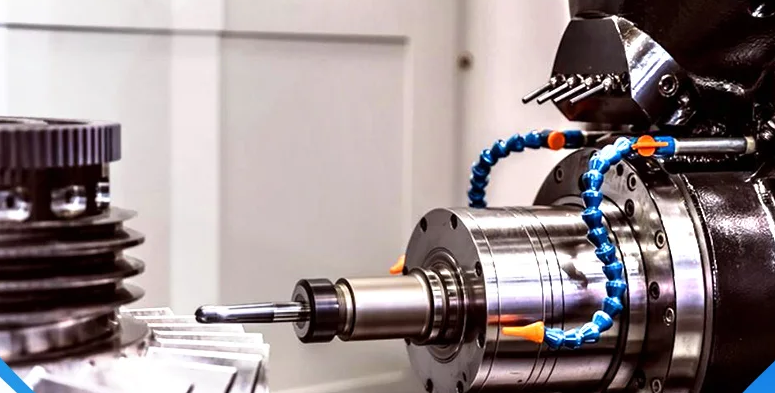
Compared with conventional 3-axis machining, 5 axis CNC machining allows simultaneous movement across five different axes, enabling cutting tools to approach complex workpieces from multiple directions without repeated manual repositioning.
This capability significantly improves machining efficiency, geometric accuracy, and surface consistency while reducing setup time and production risk.
For manufacturers producing high-value precision components, the choice between 3-axis and 5-axis machining directly affects production quality, lead time, and long-term manufacturing competitiveness.
Why Traditional 3-Axis Machining Faces Limitations
Conventional 3-axis CNC machining remains suitable for simple prismatic parts and basic milling operations. However, modern industrial components increasingly contain:
-
Deep cavities
-
Curved surfaces
-
Undercut structures
-
Compound angles
-
Freeform geometries
-
Thin-wall designs
Machining these features on 3-axis systems often requires multiple setups and repositioning operations.
Each additional setup introduces several risks:
-
Positioning deviation
-
Tolerance accumulation
-
Surface mismatch
-
Increased fixture complexity
-
Longer machining time
For precision industries such as aerospace and medical manufacturing, these errors may exceed acceptable tolerances.
5 axis CNC machining solves many of these challenges by enabling continuous multi-directional cutting in a single setup.
Single-Setup Machining Improves Accuracy
One of the biggest advantages of 5 axis CNC machining is reduced setup dependency.
Traditional multi-operation machining processes require repeated clamping and repositioning, which may introduce cumulative dimensional errors.
In contrast, 5-axis systems allow complex surfaces to be machined in one continuous process.
This improves:
-
Positional accuracy
-
Geometric consistency
-
Surface continuity
-
Dimensional repeatability
In aerospace and medical applications, tolerances often fall within ±0.005 mm to ±0.01 mm ranges, making setup stability extremely important.
Single-setup machining also reduces human intervention and minimizes alignment-related quality issues.
Complex Geometry Machining Becomes More Efficient
Modern engineering products increasingly rely on optimized structural designs for lightweight performance and higher efficiency.
Examples include:
-
Turbine blades
-
Aerospace structural components
-
Medical implants
-
Semiconductor equipment parts
-
Precision molds
-
Automotive performance components
These products often contain complex 3D geometries that are difficult or impossible to machine efficiently using standard machining methods.
5 axis CNC machining allows cutting tools to maintain optimal tool angles during complex contour machining.
This improves:
-
Cutting stability
-
Surface finish quality
-
Tool life
-
Machining precision
Complex freeform surfaces can therefore be produced more efficiently with fewer secondary operations.
Shorter Tool Length Improves Machining Stability
In deep cavity machining, traditional 3-axis systems often require extended cutting tools to reach difficult areas.
Longer tools increase:
-
Tool deflection
-
Vibration
-
Chatter marks
-
Surface roughness
-
Dimensional instability
5 axis CNC machining allows the spindle and workpiece to rotate simultaneously, enabling shorter cutting tools to maintain optimal engagement angles.
Shorter tool overhang significantly improves machining rigidity and reduces vibration during high-speed cutting.
This is particularly important when machining:
-
Titanium alloys
-
Inconel
-
Hardened steel
-
Stainless steel
-
Aluminum aerospace alloys
Surface Finish Quality Improves with Multi-Axis Control
Surface quality is critical in industries where components experience aerodynamic flow, fluid movement, or biological contact.
Examples include:
-
Aerospace turbine surfaces
-
Medical implants
-
Semiconductor vacuum components
-
Optical equipment
5-axis machining enables smoother tool paths and more consistent cutting contact across curved surfaces.
This reduces:
-
Tool marks
-
Surface discontinuities
-
Manual polishing requirements
In some applications, surface roughness can be controlled below Ra 0.8 μm or even finer depending on material and tooling configuration.
Reduced post-processing improves overall manufacturing efficiency.
Machining Time Reduction Improves Production Efficiency
Although 5 axis CNC machines involve higher equipment investment, they often reduce total production cost through improved efficiency.
Key efficiency improvements include:
-
Reduced setup time
-
Fewer fixtures
-
Shorter machining cycles
-
Lower manual intervention
-
Reduced rework rates
Complex parts that previously required multiple operations across several machines can often be completed in one integrated machining cycle.
This is especially valuable in low-volume, high-mix precision manufacturing environments.
Fixture Complexity Is Significantly Reduced
Traditional complex-part machining often requires customized fixtures for each machining orientation.
These fixtures increase:
-
Engineering cost
-
Production preparation time
-
Inventory complexity
5 axis CNC machining reduces fixture dependence because the machine itself provides multi-directional positioning capability.
Simplified fixturing improves:
-
Setup flexibility
-
Changeover efficiency
-
Manufacturing responsiveness
For prototype production and rapid iteration projects, reduced fixture development time becomes a major advantage.
5 Axis CNC Machining Supports Advanced Materials
Modern industrial products increasingly use advanced engineering materials that require highly stable machining conditions.
These materials include:
-
Titanium alloys
-
Nickel-based superalloys
-
Carbon fiber composite structures
-
High-strength aluminum alloys
-
Hardened tool steel
These materials often generate high cutting temperatures and significant tool wear.
5-axis machining improves cutting dynamics by maintaining optimized tool engagement angles, reducing heat concentration and improving chip evacuation.
This enhances both tool life and machining reliability.
Inspection Integration Improves Quality Control
Precision machining today requires more than dimensional production capability. It also requires traceable quality verification.
Advanced 5 axis CNC machining environments increasingly integrate:
-
CMM inspection systems
-
In-process probing
-
Laser measurement systems
-
Real-time compensation technology
These technologies improve process control while reducing dimensional deviation during production.
For aerospace, medical, and semiconductor industries, full-process quality traceability has become increasingly important.
Industry Demand for 5 Axis CNC Machining Continues Growing
Several global manufacturing trends are accelerating demand for 5-axis capability:
-
Lightweight engineering
-
Precision medical devices
-
Aerospace expansion
-
Semiconductor equipment development
-
High-performance automotive systems
-
Automation equipment growth
As product complexity increases, manufacturers capable of stable 5 axis CNC machining gain significant competitive advantages in global precision manufacturing markets.
JunFeng’s Precision Manufacturing Capability
ZhongShan JunFeng Co., Ltd. has long focused on delivering high-standard CNC machining solutions for global customers.
The company is equipped with advanced machining and inspection equipment to ensure precision throughout the entire production process, from order management to finished components.
Its manufacturing experience spans multiple industries including:
-
Aerospace and defense
-
Automotive engineering
-
Medical and medical devices
-
Electronics and semiconductor industries
By combining advanced machining capability with strict quality control, JunFeng supports customers requiring high-precision, high-complexity component manufacturing solutions.
Conclusion
5 axis CNC machining has become a critical technology for modern precision manufacturing because it enables efficient production of highly complex components with superior dimensional accuracy and surface quality.
Compared with conventional machining methods, 5-axis systems significantly improve production flexibility, reduce setup errors, shorten machining cycles, and enhance machining stability for advanced materials and intricate geometries.
As industries continue demanding tighter tolerances, lighter structures, and faster development cycles, 5 axis CNC machining will remain one of the most important core technologies driving high-end manufacturing worldwide.
http://www.jfcncparts.com
ZhongShan JunFeng Co., Ltd -
-
AuthorPosts

- You must be logged in to reply to this topic.